Windsor Hill Wood
Windsor Hill Wood
Concept, Audience & Creative Strategy
This documentary responds to the ethos of Windsor Hill Wood, a woodland refuge supporting adults through challenging periods of life. The intention was to create a sustained, observational film that reflects the organization's values of acceptance, community, and recovery over time, rather than constructing a simplified or outcome-driven narrative.
The primary audience is donors, followed by volunteers and individuals who may seek support from Windsor Hill Wood, recognizing that the space can also be therapeutic for those who contribute their time. This shaped a tone that prioritizes trust, transparency, and emotional authenticity, allowing donors to engage with the space in a way that feels honest and grounded rather than persuasive or directive.
Formally, the film draws on documentary conventions, using observational footage of daily activity — such as land work, shared tasks, and social interaction — alongside natural sound, including birds, environmental ambience, and domestic textures. A slower pacing immerses the viewer in the rhythms of the environment. The use of extended takes and minimal intervention in interviews reinforces a sense of presence rather than performance. It deliberately avoids the “crisis-led” structure often associated with charity storytelling, where narratives are driven by urgency and persuasive frameworks. While the film still engages emotionally, it prioritises authenticity and observation over directive or manipulative techniques.
Ethical considerations were central throughout. Filming within a refuge environment required sensitivity around representation, consent, and emotional vulnerability. The film therefore avoids dramatization or manipulation, focusing on authenticity and respect for contributors, ensuring the portrayal aligns with both the organization's values and the lived realities of those within it.
This approach positions the audience as observers rather than targets of persuasion, encouraging a longer-term emotional connection to the organization. However, I can see how this could risk reducing immediacy for audiences accustomed to more directive charity narratives.
Production Credits
Roles:
•Writer / Producer / Director / Editor / Drone Operator / Camera B Operator: Luke de Pass
•Camera A Operator / Production Sound Mixer: Charlie Sullivan
•Interviewer: Chris Craig Junior
Equipment: DJI AVATA 2, Sony A6300 (2), 30mm Lens, 50mm Lens, Telephoto tripod (2), lav mic (2), Blue Yeti mic, Boom Mic, DJI RONAN Gimbal RS3, Soft box light, Light Diffuser
Shoot days: 4 filming days
Distribution Strategy & Audience Reach
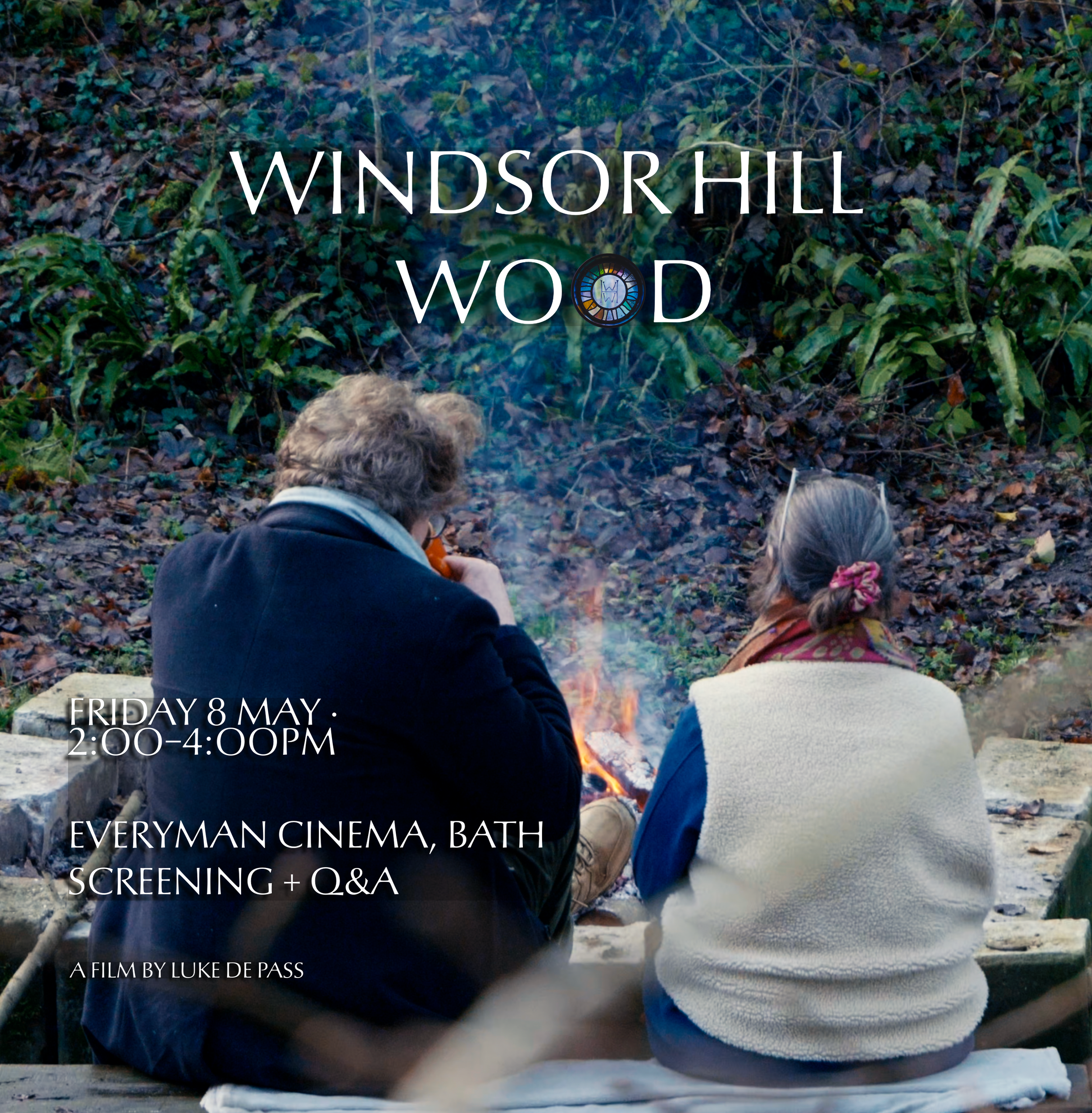
Invitation-only screening at Everyman Cinema, Bath
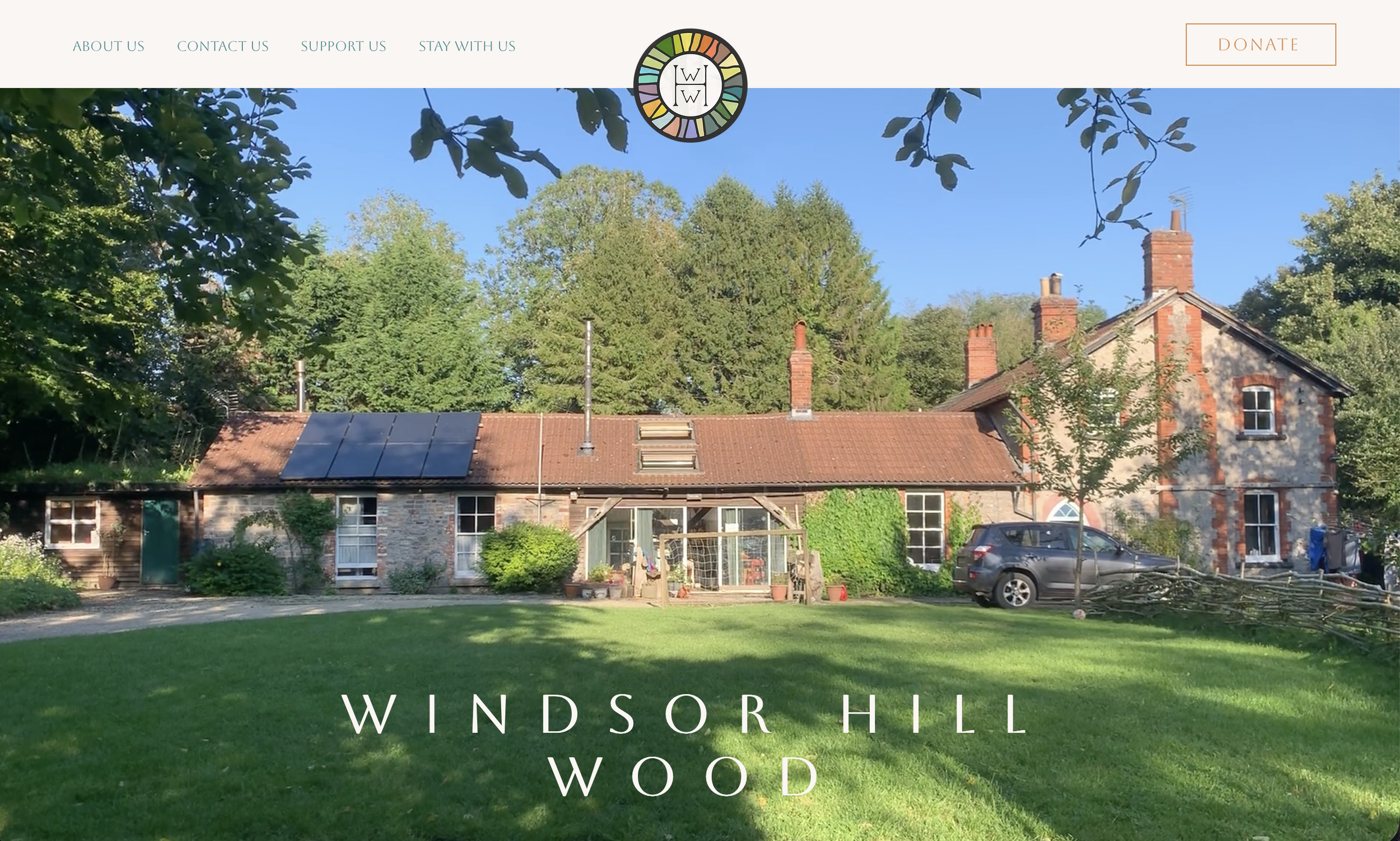
WHW website integration – https://www.windsorhillwood.co.uk
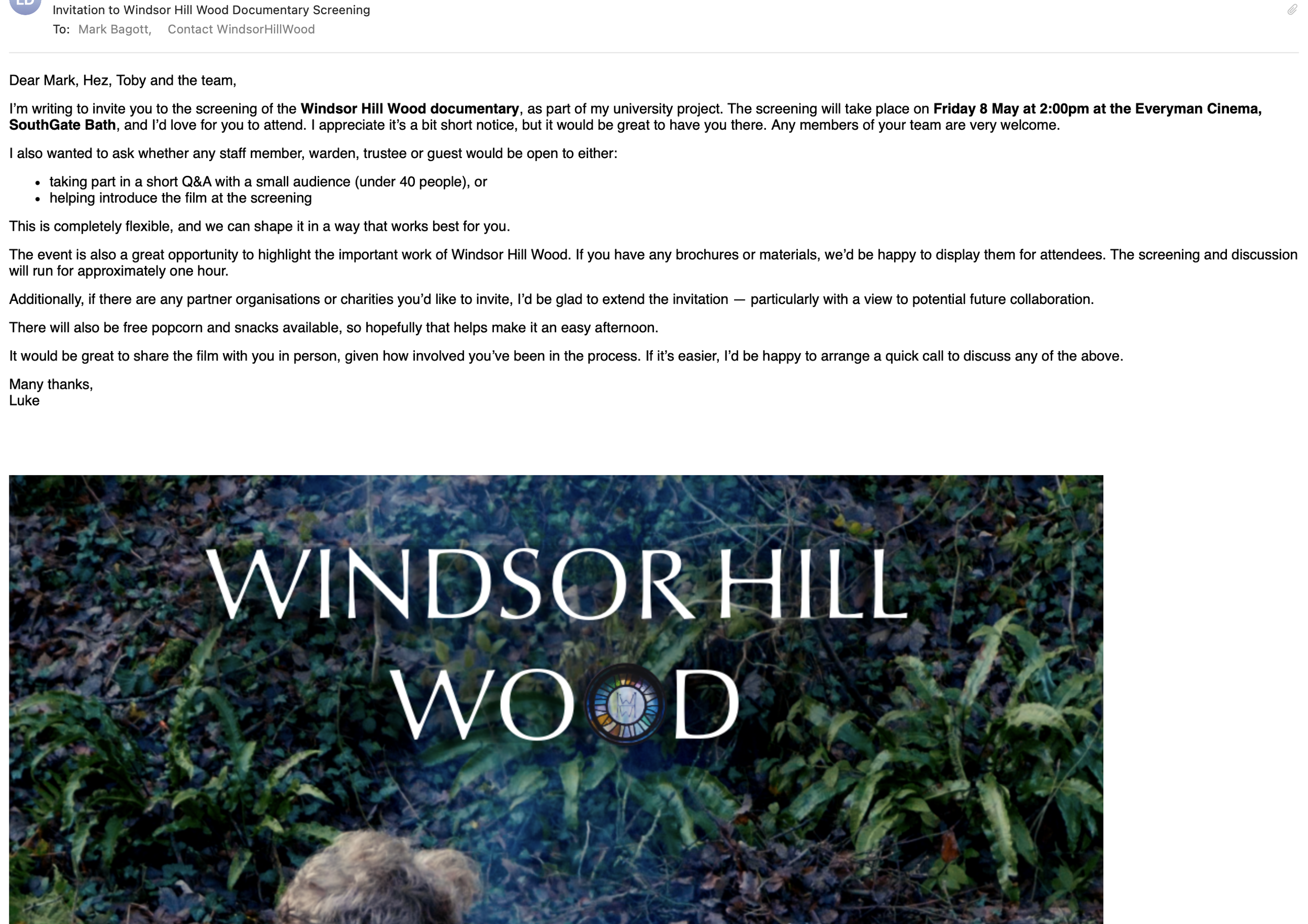
Inviting Windsor Hill Wood to screening via email
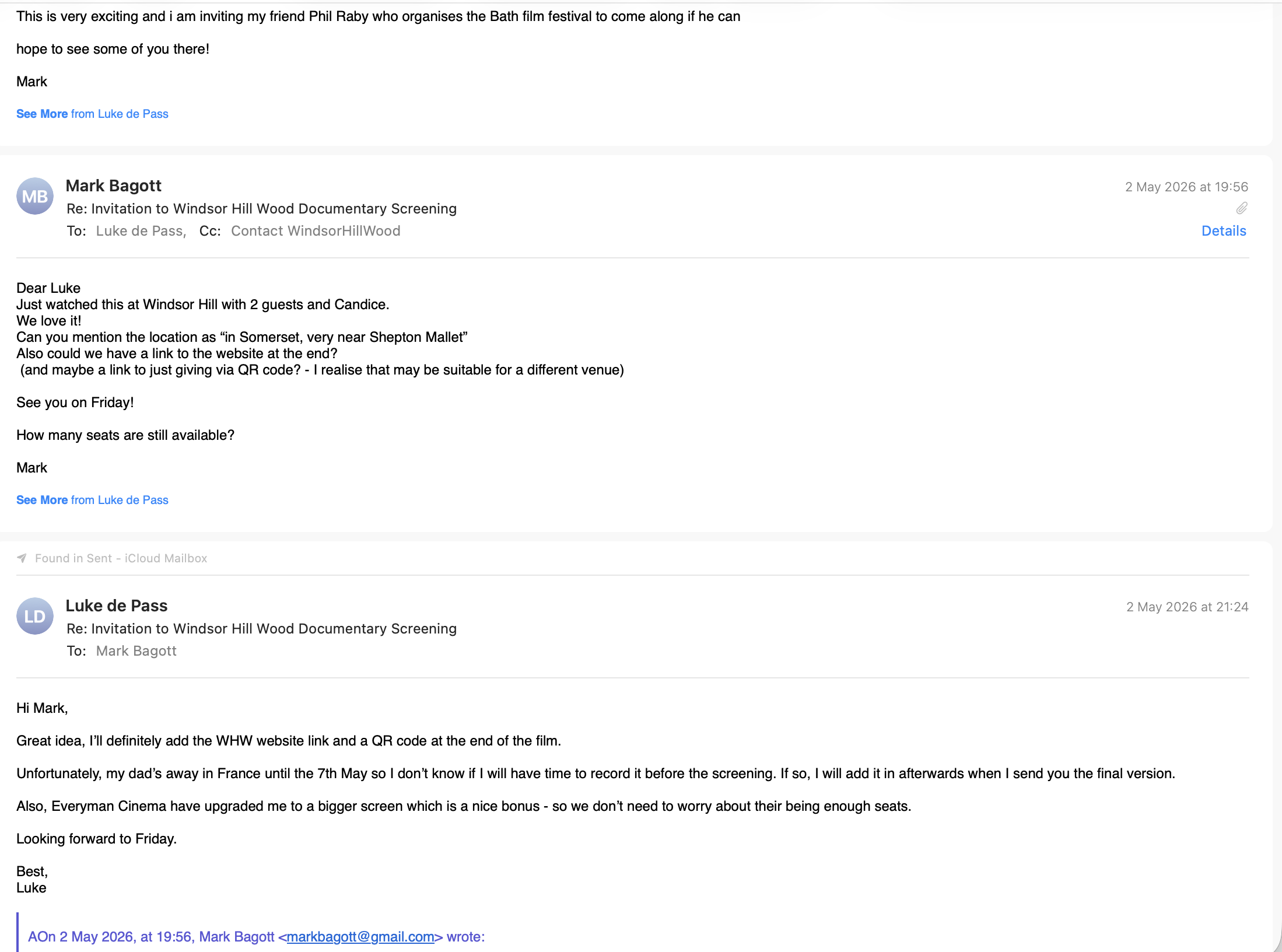
Screenshots of liaising with Windsor Hill Wood
This documentary will first be screened at Everyman Cinema Bath on the 8th May as an invitation-only event for Windsor Hill Wood, alongside invited guests including supporters, filmmakers, friends and family, and organisations connected to areas such as mental health, wellbeing, and environmental care. The screening functions both as an exhibition of the work and as an opportunity to increase awareness of Windsor Hill Wood’s values and potentially encourage future donor engagement. Following the screening, the documentary will be submitted to selected documentary and film festivals that align with the project’s themes, including nature, wellbeing, charity, and community-focused storytelling. This stage of distribution is intended to position the film within wider conversations around social impact and observational documentary practice, while also expanding its audience beyond the immediate community surrounding Windsor Hill Wood.
After the festival run, the documentary will be publicly accessible online through the Windsor Hill Wood website, where the fundraising advert produced earlier in the project is already hosted. Short excerpts and promotional clips will also be shared across Windsor Hill Wood’s social media platforms, including Instagram and Facebook, allowing the project to reach wider audiences in shorter, more accessible formats.
The film is also currently hosted privately on Vimeo for sharing and review purposes during production, with plans for a public YouTube release following the festival period. YouTube was chosen due to its accessibility and suitability for longer-form content, while also providing opportunities for broader audience engagement and discoverability.
While the documentary’s slower pacing and 36-minute runtime may limit accessibility for audiences accustomed to short-form online content, this format supports a more immersive and reflective viewing experience that aligns with the project’s observational approach.
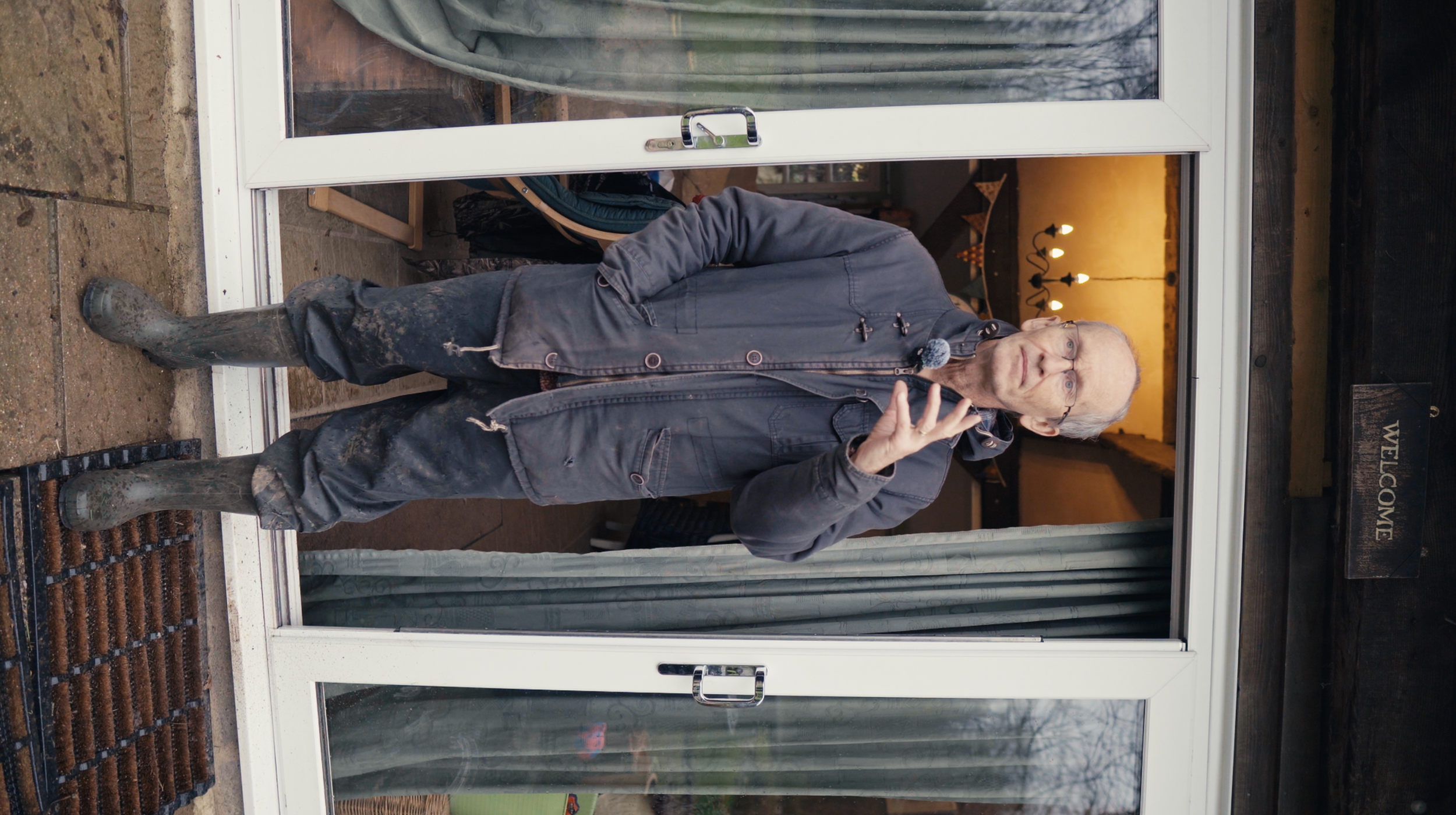
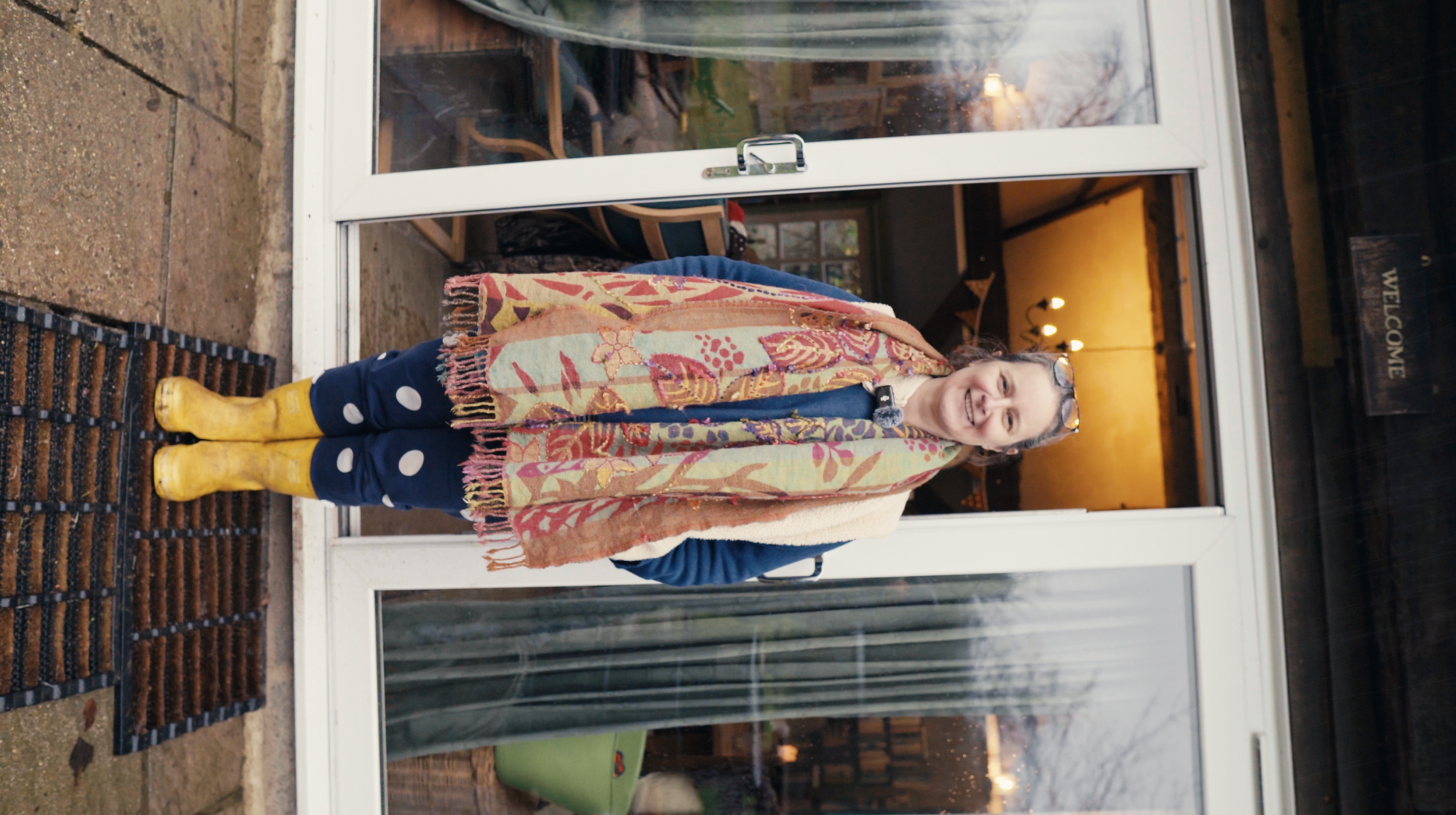
Vertical Short-Form Content for Social Media (Youtube shorts, instagram etc, TikTok).
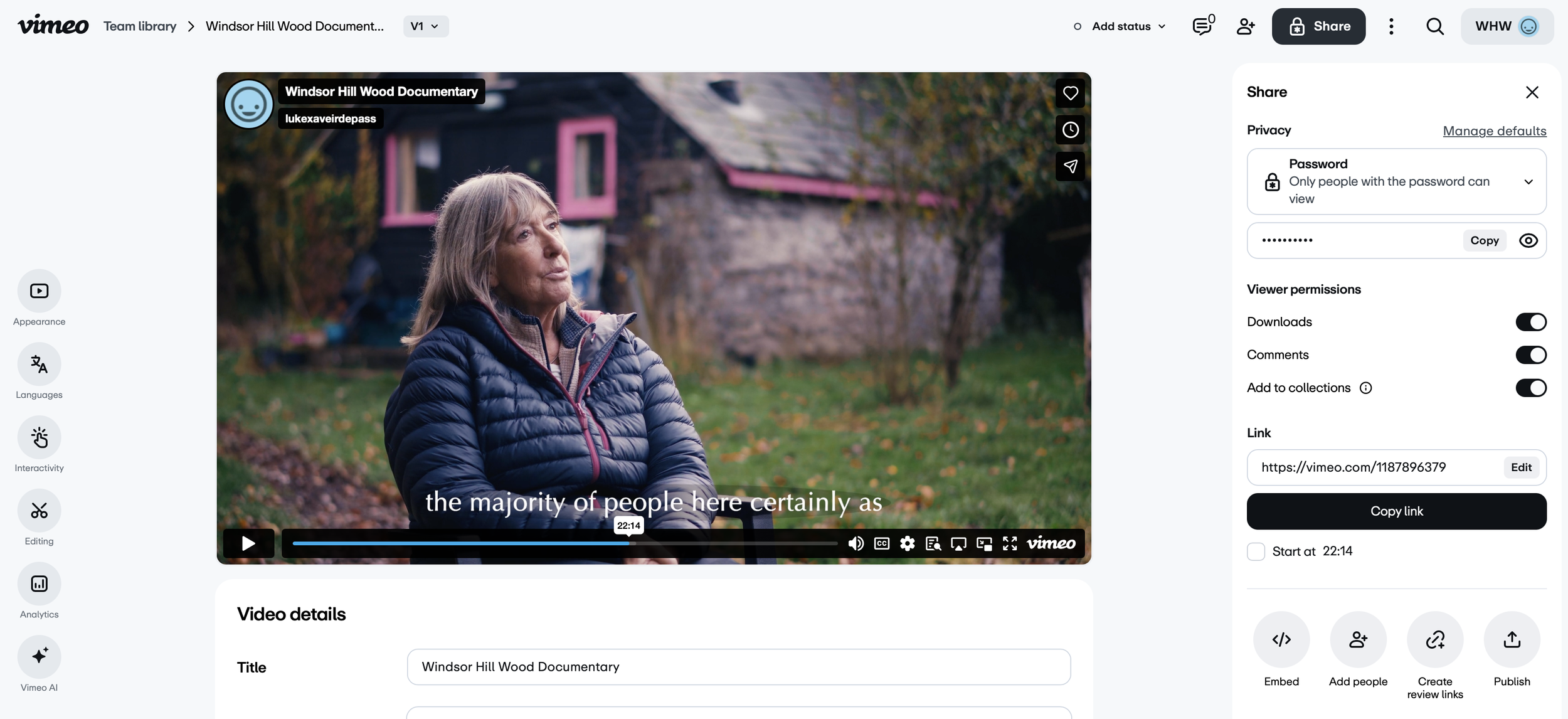
Screenshot of Vimeo Private Link
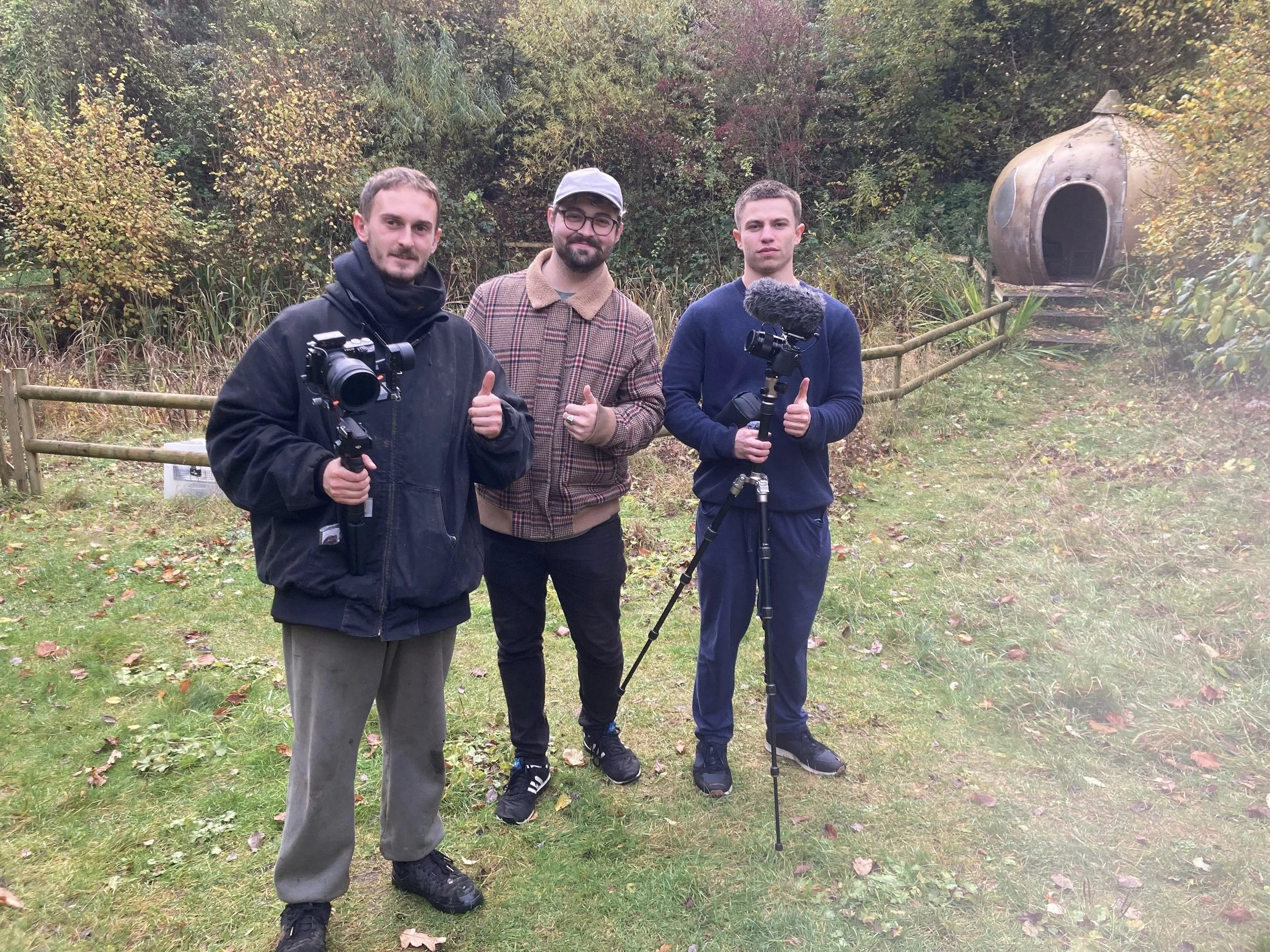
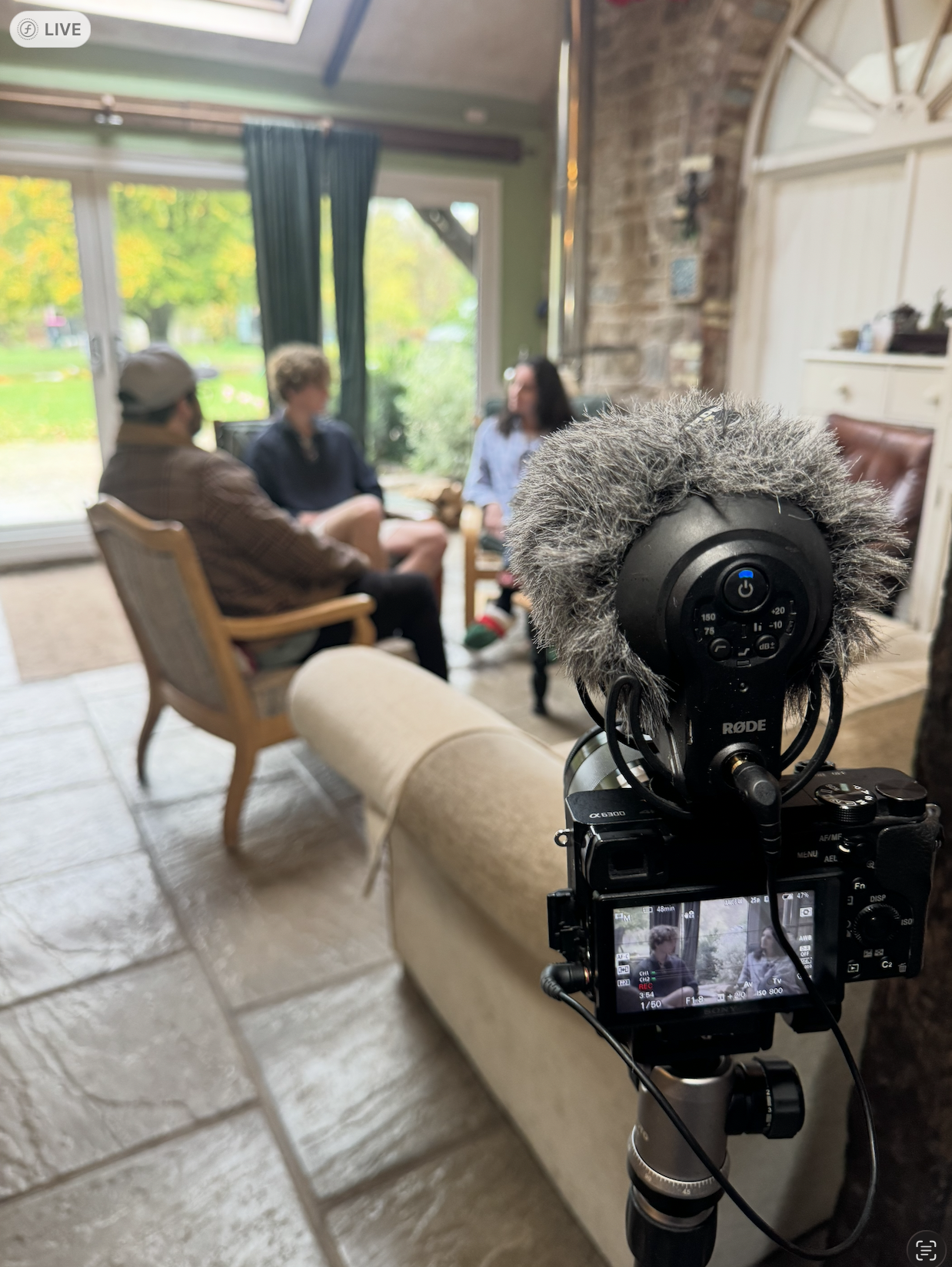
BTS during filming at Windsor Hill Wood.
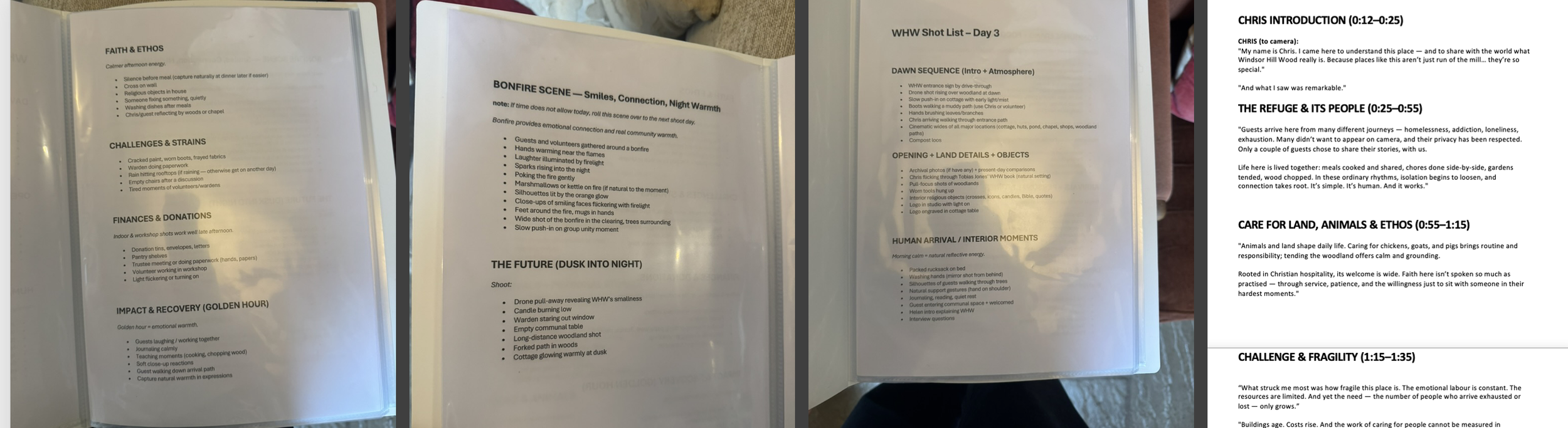

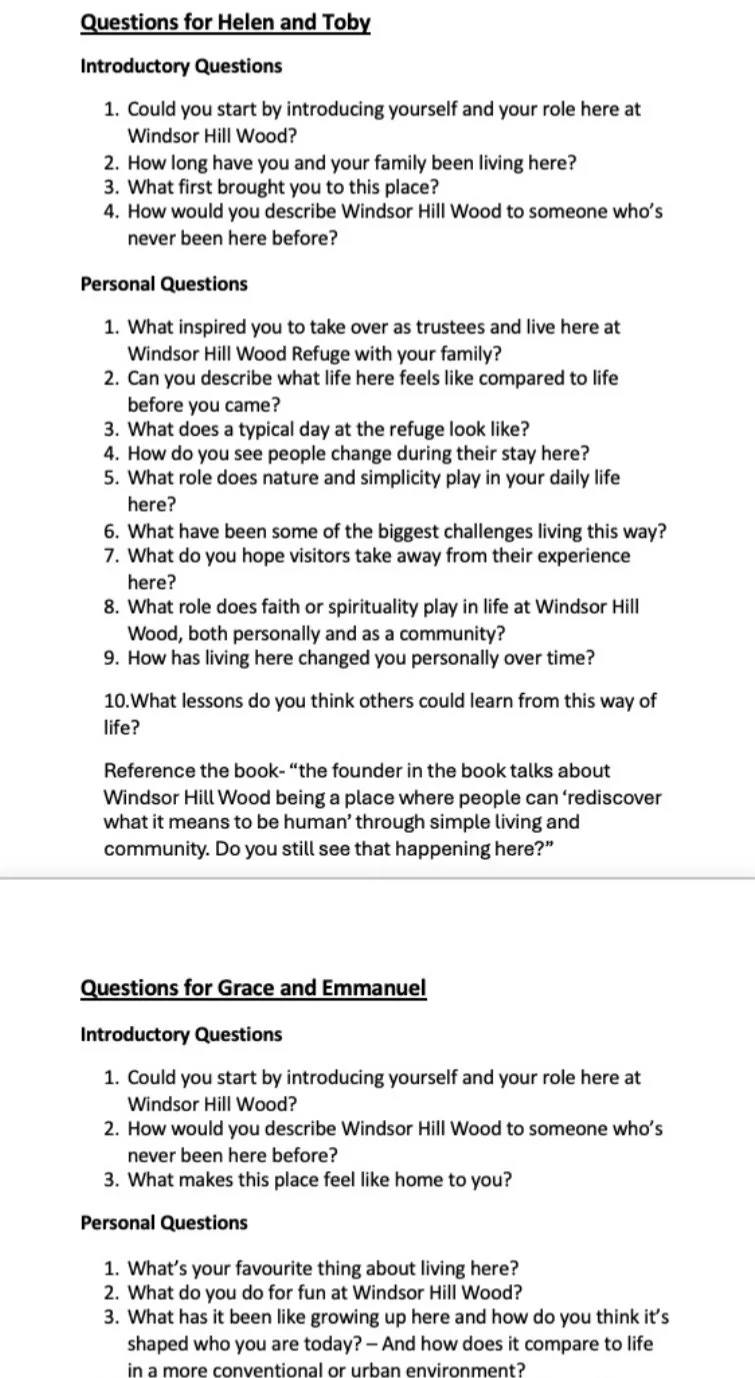
Early interview planning and shot-lists used during pre-production.
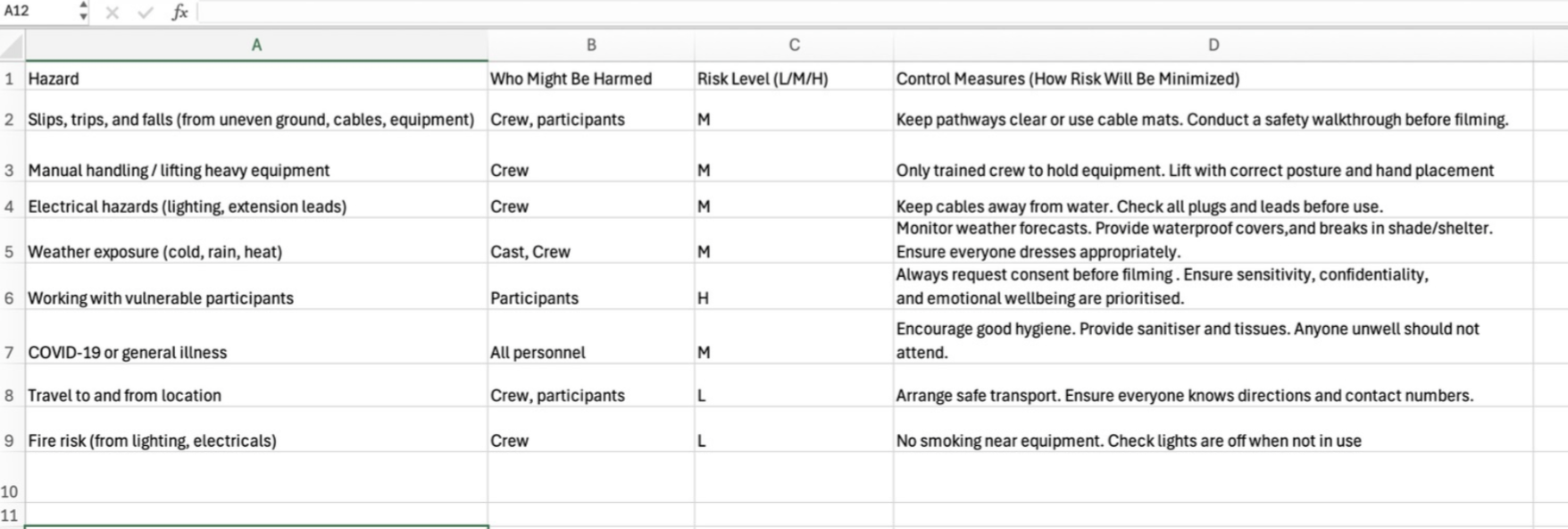
Production risk assessment created during pre-production
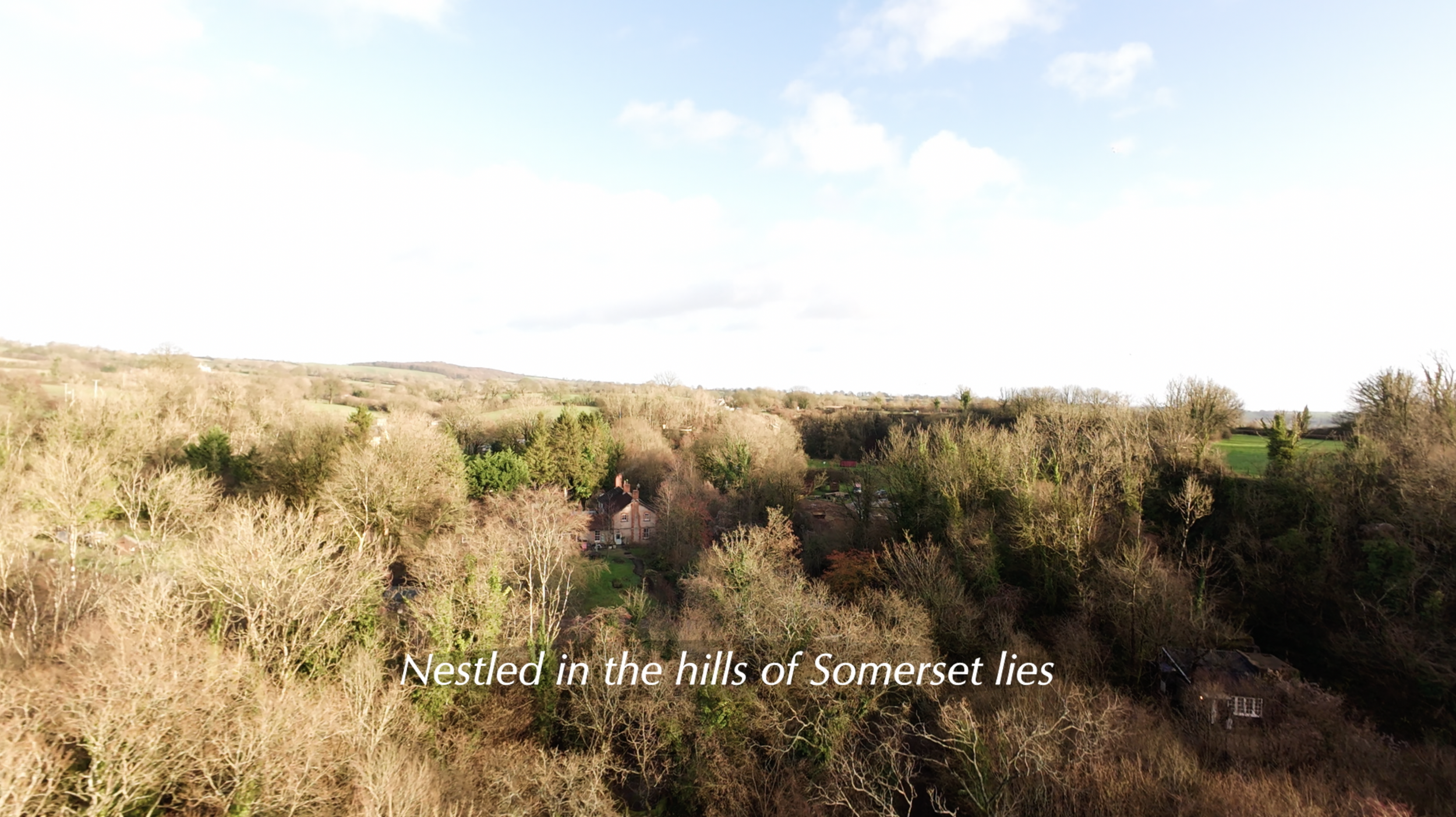
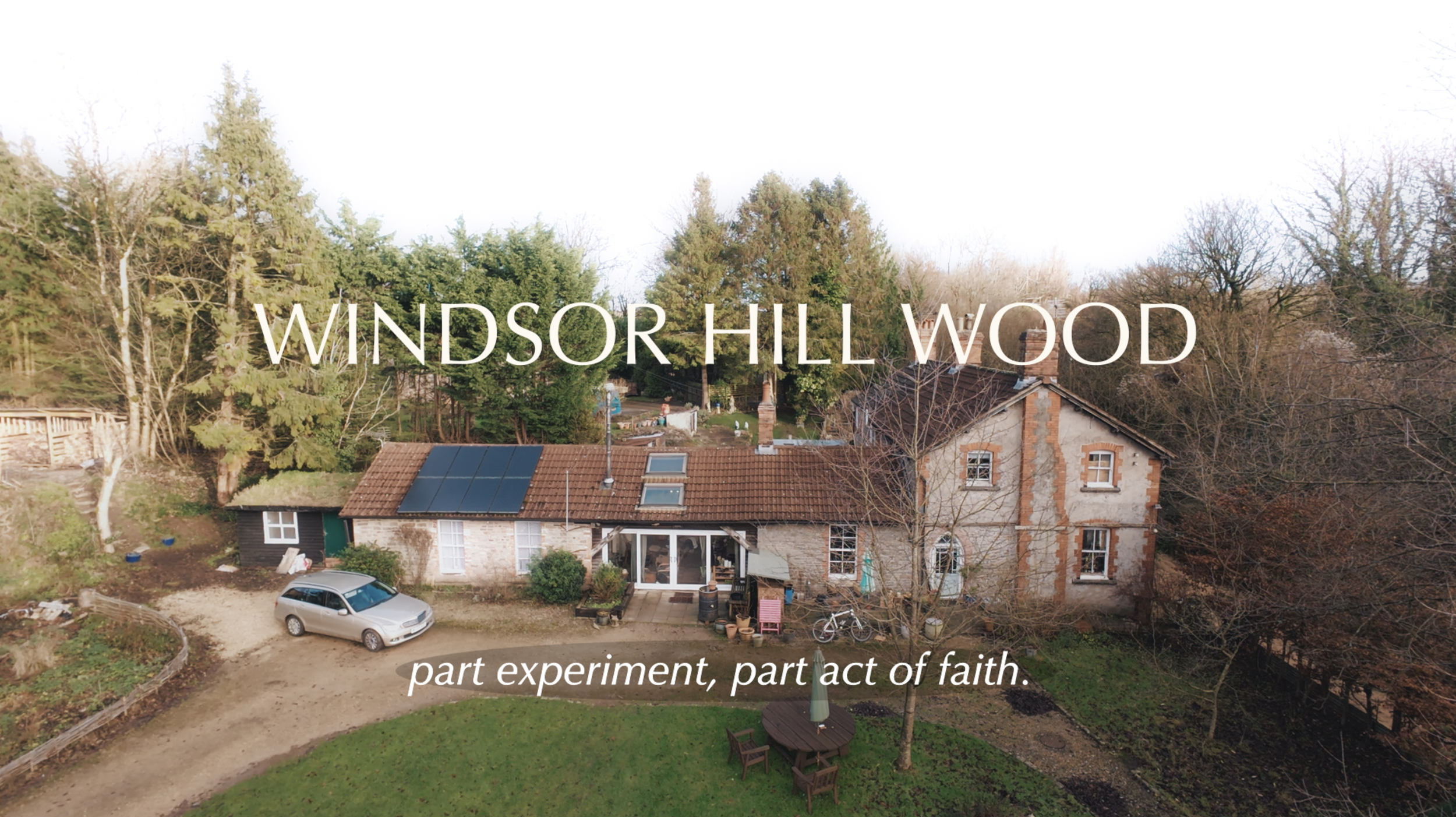
Drone footage used to establish the geographical isolation of Windsor Hill Wood.
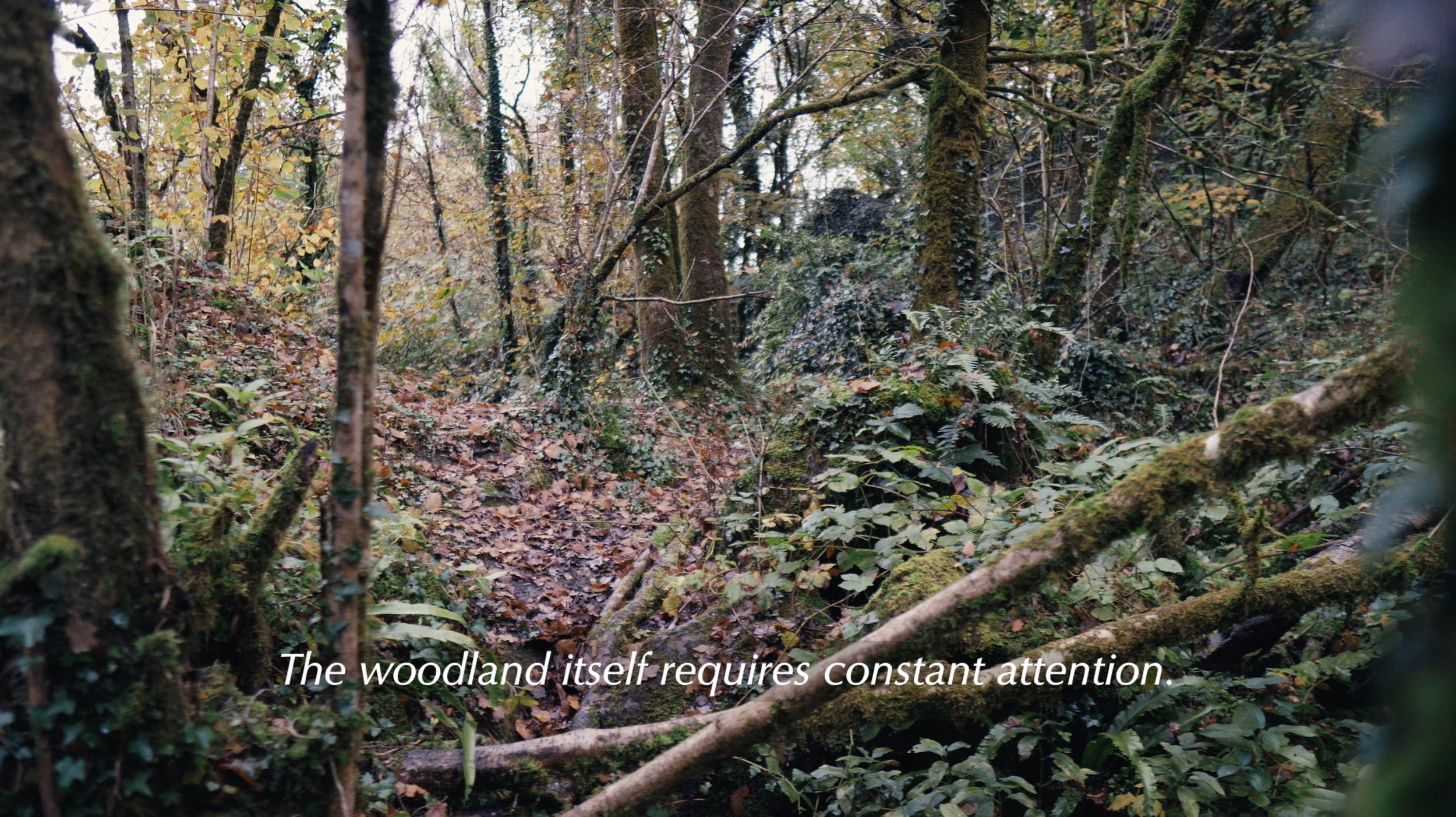
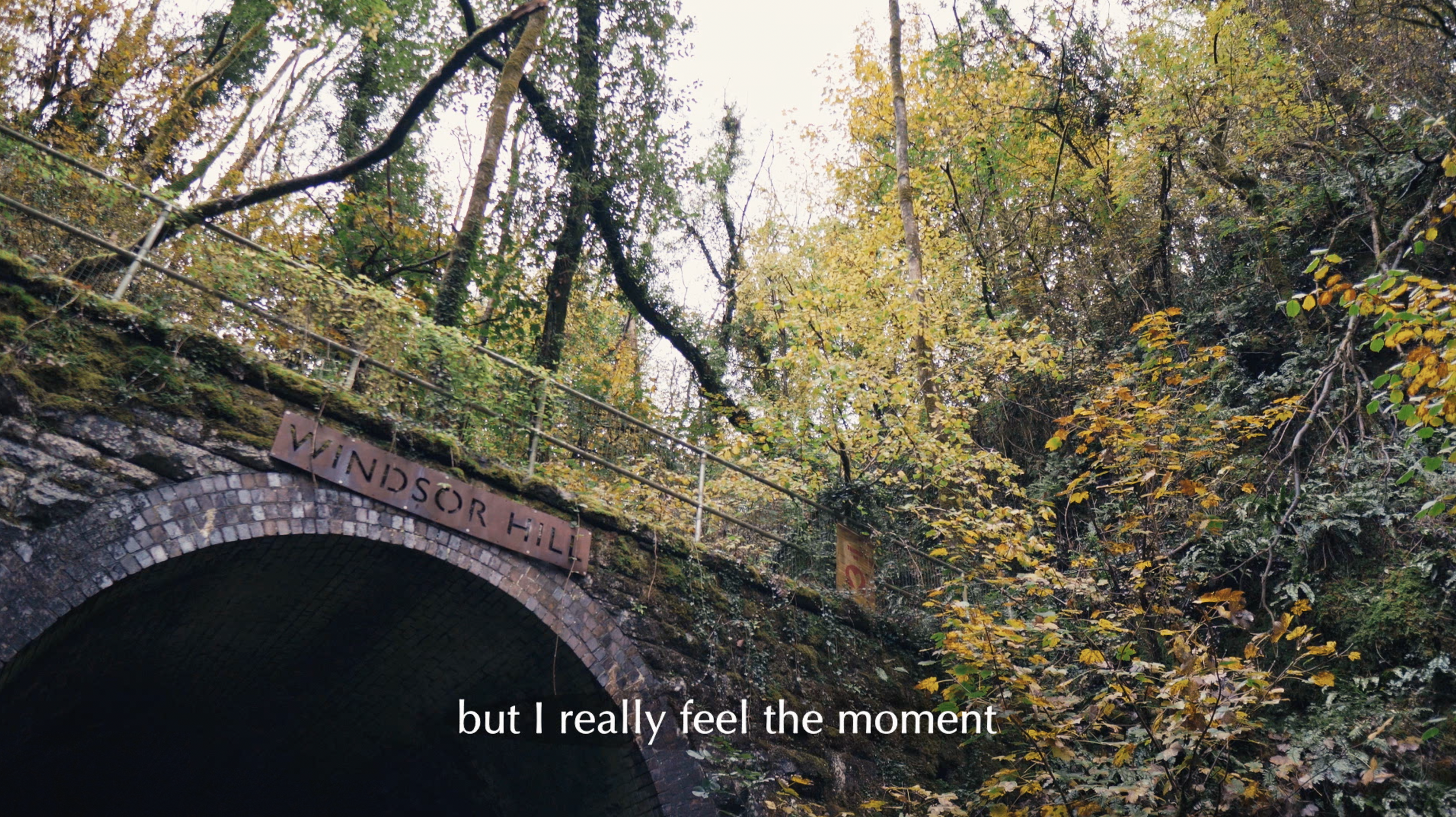
Observational sequences and longer static compositions used to support the documentary’s slower reflective pacing.
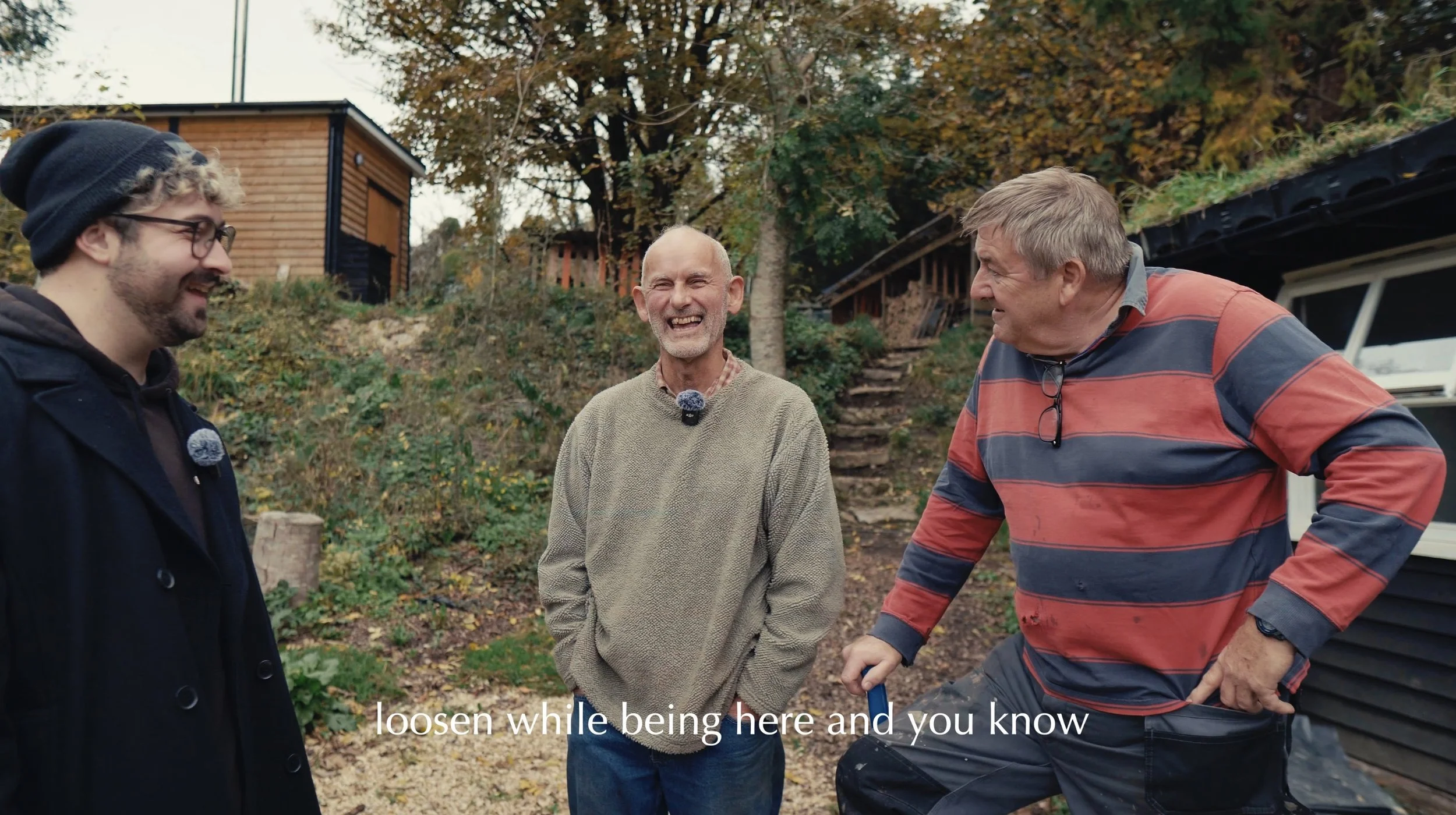
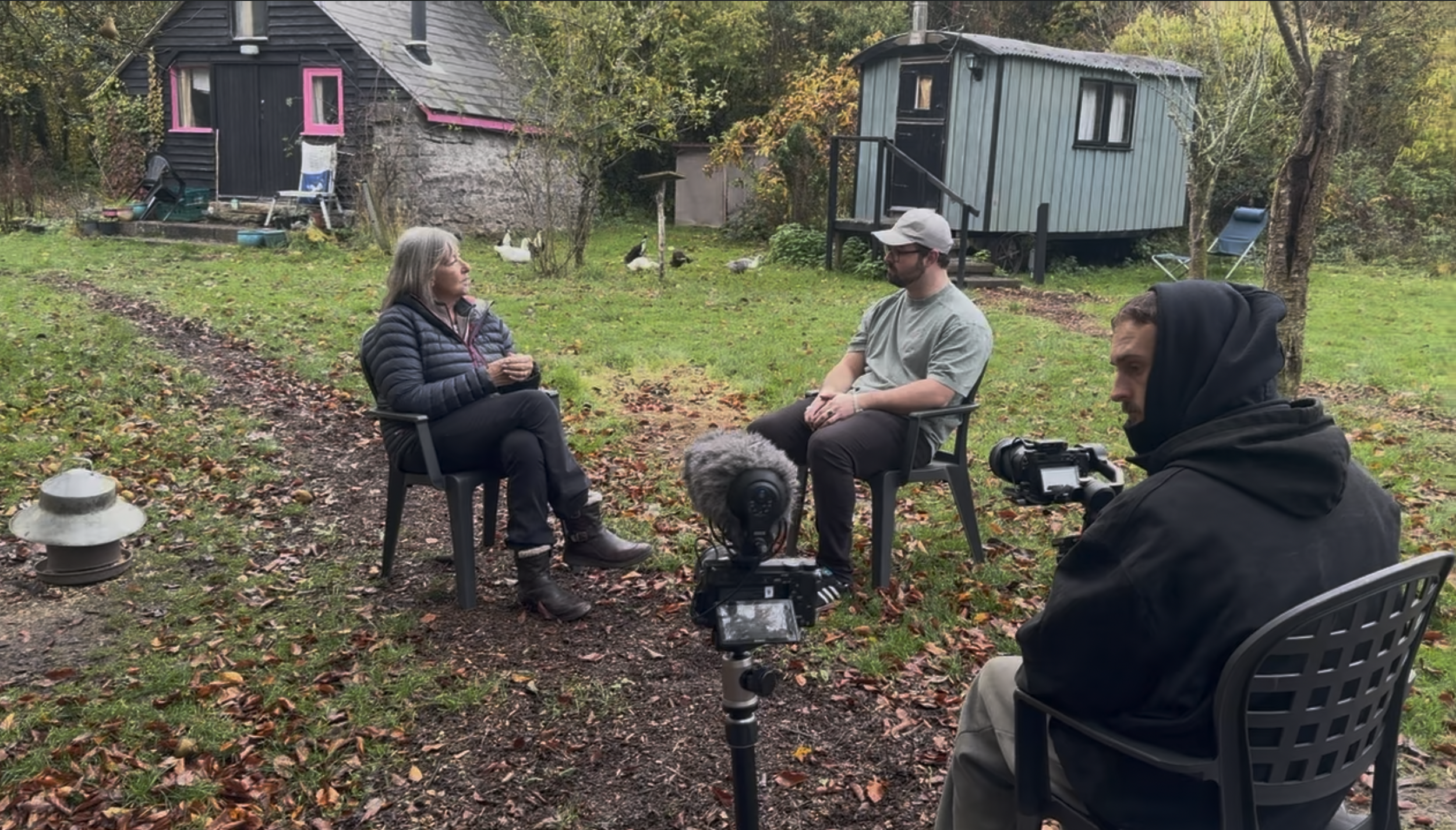
Interview setup using lavalier microphones for dialogue clarity alongside ambient environmental audio recording.
My Role & Technical Development
Role & Responsibilities
For this project, I worked as the writer, producer, director, cinematographer and editor, meaning that I was responsible for overseeing the documentary from initial research through to final post-production. This required balancing both creative and organisational responsibilities across a long-form documentary process, including location scouting and access, interview planning, filming schedules, narrative structure, editing, colour grading, and distribution preparation.
Pre-Production & Interview Development
During pre-production, I developed detailed interview structures, thematic shot lists, and observational filming plans to ensure the documentary remained focused while still allowing room for spontaneity and natural interaction. Rather than scripting contributors heavily, I designed open-ended interview questions that encouraged reflection and authenticity, particularly when discussing sensitive topics such as addiction, loneliness, recovery, and faith. This approach became important in maintaining the observational tone of the documentary and avoiding overly performative responses.
Cinematography & Visual Style
As cinematographer, I aimed to create visuals that reflected the calm and reflective atmosphere of Windsor Hill Wood. I mainly relied on natural lighting and practical interior lighting to preserve realism and avoid making the environment feel overly stylised or commercial. Interviews were filmed using shallow depth of field to isolate contributors emotionally while still keeping aspects of the environment visible within the frame. Wider observational shots were often composed using natural leading lines, woodland depth, and open framing to immerse the viewer within the environment rather than simply documenting activity.
Camera Movement & Filming Techniques
The documentary also required adapting my filming techniques depending on context. Some sequences were filmed handheld or with a gimball to preserve intimacy and immediacy, particularly during observational moments involving communal activity and movement through the woodland. Other scenes used stabilised movement or locked-off tripod compositions to create a more controlled and reflective viewing experience. Drone footage was used selectively to establish the geographical isolation and scale of Windsor Hill Wood without making the documentary feel promotional or overly cinematic.
Post-Production & Editing
The most significant area of technical development occurred during post-production. The editing process involved reviewing and organising approximately 12 hours of interview, observational, archival, and environmental footage into a coherent 36-minute documentary narrative using DaVinci Resolve. The timeline became highly layered, combining interviews, subtitles, atmospheric sound design, voice-over, music, archival imagery, and observational sequences across multiple audio and video tracks.
Rather than relying on rapid cutting or heavily manipulative editing techniques, I focused on allowing silence, pauses, ambient sound, and longer takes to breathe naturally. This created a more immersive viewing experience while supporting the documentary’s themes of reflection, hospitality, and emotional recovery.
Sound Design & Audio Mixing
Considerable attention was also given to sound design and accessibility. Ambient woodland sounds, interior room tone, footsteps, animals, and environmental textures were layered carefully beneath dialogue to reinforce atmosphere and spatial realism. Subtitles were added throughout the documentary to improve accessibility and ensure clarity during quieter interview moments.
The lavalier microphones were prioritised for dialogue clarity, while the on-camera Rode microphone was mixed subtly underneath to preserve the natural atmosphere of the woodland environment. I generally reduced ambient environmental layers to around -10dB beneath dialogue so that woodland sounds, room tone, footsteps, animals, and fire ambience remained present without overpowering contributors’ voices.
In situations where background noise became distracting, I used DaVinci Resolve’s voice isolation tools carefully and selectively to improve dialogue clarity while avoiding an artificial or over-processed sound. I also used AI-assisted dialogue and music balancing tools during parts of the edit to ensure interview speech remained coherent and intelligible when layered with atmospheric music and environmental sound design.
Colour Grading & Visual Style
Colour grading became an important part of shaping the documentary’s visual identity. While I wanted the film to remain grounded and observational, I also intentionally pushed the image towards a more cinematic aesthetic through controlled contrast, exposure balancing, increasing warmth on cloudier days, and tonal shaping within DaVinci Resolve. I used subtle S-curve adjustments to deepen contrast and create richer highlight separation, helping the woodland environments feel immersive and atmospheric without appearing artificial or overly stylised.
I preserved the muted greens, earthy browns, and warm interior lighting of Windsor Hill Wood to maintain a sense of realism, while still enhancing depth and texture across interviews and environmental footage. This balance between realism and cinematic presentation reflected the documentary’s wider intention of creating an emotionally engaging viewing experience without losing authenticity.
One of the biggest editorial challenges was discovering the documentary’s final narrative structure. Because the project was observational rather than plot-driven, the documentary was not constructed around a single event or dramatic storyline. Instead, the final structure emerged gradually during post-production through reviewing interviews, observational footage, and recurring thematic ideas.
After experimenting with multiple narrative arrangements during the edit, I organised the documentary into thematic sections including the opening introduction, who the refuge is for, care for land and animals, daily life and the outside world, faith and ethos, challenges and strains, finances and donations, impact and recovery, and finally reflections on the future of Windsor Hill Wood. This structure allowed the documentary to move gradually from atmosphere and observation into wider social, emotional, and philosophical questions, while maintaining a coherent emotional progression across the 36-minute runtime.
Challenges & Problem Solving
One of the main challenges during post-production was maintaining audience engagement while preserving the slower observational pacing central to the documentary’s identity. Because the documentary focused heavily on atmosphere, reflection, and natural interaction rather than dramatic plot progression, there was a risk that the pacing could feel too static or repetitive. This challenge was further shaped by ethical and access limitations during production, as only two guests consented to appearing on camera. As a result, the documentary became more interview and voice-over driven than originally planned, with observational footage and environmental b-roll used to reinforce atmosphere, context, and emotional tone rather than documenting extensive communal activity directly.
To address this, I carefully balanced longer observational sequences with interview material, voice-over narration, archival imagery, environmental detail, and subtle rhythmic changes in editing pace to maintain viewer engagement while still preserving the reflective tone of the film. I also contacted Windsor Hill Wood to source archival photographs from earlier periods of the refuge’s history, which helped provide additional visual material during more voice-over driven sections of the documentary. Including these images also allowed the documentary to reference founder Tobias Jones and the wider historical development of the refuge, helping connect the present-day community to its original ethos and foundation.
Another significant challenge involved synchronising externally recorded lavalier microphone audio with interview footage. Because interviews were recorded using separate wireless lav microphones which were stored as seperate files as the video recorded alongside an on-camera Rode microphone capturing environmental ambience, careful syncing and balancing were required throughout the edit to maintain realism and continuity. Managing background noise also became important, particularly during outdoor woodland interviews where wind, movement, birds, and environmental sounds could interfere with dialogue clarity. I addressed this by carefully balancing ambient layers beneath dialogue and selectively using DaVinci Resolve’s voice isolation tools to improve clarity without creating an unnatural or over-processed sound.
Maintaining visual consistency throughout the documentary also became an important technical challenge. Filming took place across multiple shooting days under changing weather conditions, lighting environments, and seasons, which created noticeable differences in exposure, colour temperature, and contrast between shots. During colour grading in DaVinci Resolve, I used tonal shaping, warmth balancing, and subtle S-curve contrast adjustments to unify the footage visually while still preserving the documentary’s grounded and observational style.
One of the biggest creative challenges was discovering the documentary’s final narrative structure. Because the project was observational rather than plot-driven, the documentary was not constructed around a single event or dramatic storyline. Instead, the final structure emerged gradually during post-production through reviewing interviews, observational footage, and recurring thematic ideas.
After experimenting with multiple narrative arrangements during the edit, I organised the documentary into thematic sections including the opening introduction, who the refuge is for, care for land and animals, daily life and the outside world, faith and ethos, challenges and strains, finances and donations, impact and recovery, and finally reflections on the future of Windsor Hill Wood. This structure allowed the documentary to move gradually from atmosphere and observation into wider social, emotional, and philosophical questions, while maintaining a coherent emotional progression across the 36-minute runtime.
Working across multiple production roles simultaneously also created organisational challenges throughout the project. Balancing directing, cinematography, editing, scheduling, communication with contributors, and post-production management required strong time organisation and adaptability across each stage of production. This is an area I still want to improve in future projects, particularly when taking on multiple responsibilities at once. However, the experience taught me valuable lessons about project organisation, workflow management, and maintaining creative consistency across a long-form documentary process. Managing these responsibilities ultimately strengthened both my technical workflow and my understanding of how documentary filmmaking evolves through collaboration, reflection, and ongoing editorial development.
Reflection & Creative Development
Throughout the production process, I developed stronger communication with the client and in storytelling, editing, cinematography, and post-production skills, while also improving my ability to manage a complex independent documentary project from conception through to completion.
This evolving editorial process is also one of the aspects of documentary filmmaking that I find most creatively rewarding. Unlike more traditionally scripted narrative cinema, where structure is often established more rigidly during pre-production, the documentary continued developing throughout the edit as new emotional connections, thematic relationships, and narrative rhythms emerged from the footage itself. Rather than following a rigid pre-determined structure, the documentary gradually revealed its final shape through experimentation, thematic restructuring, and reflection during post-production.
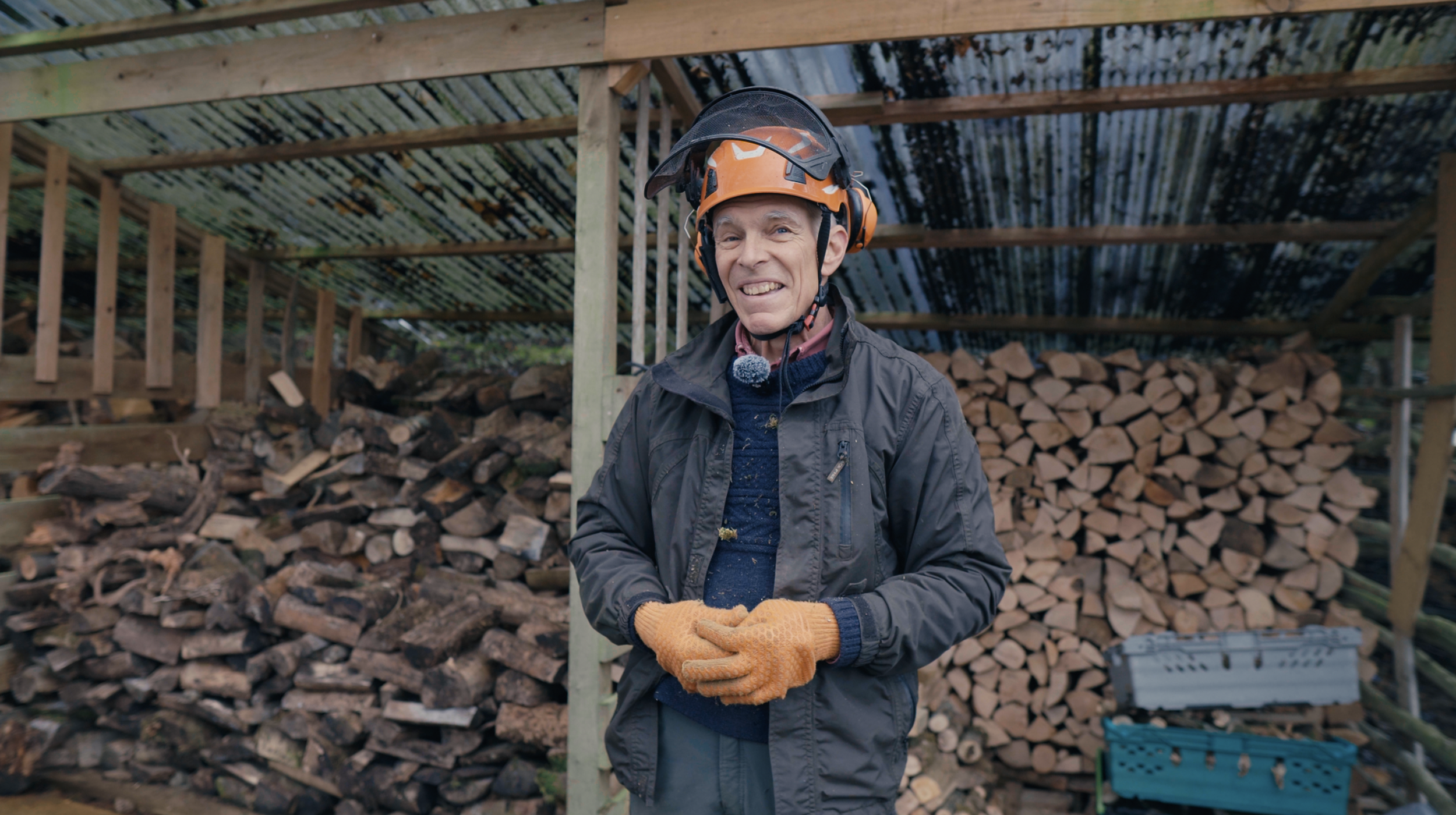
Interview composition using natural lighting & shallow depth of field in figures 3,4 & 6.
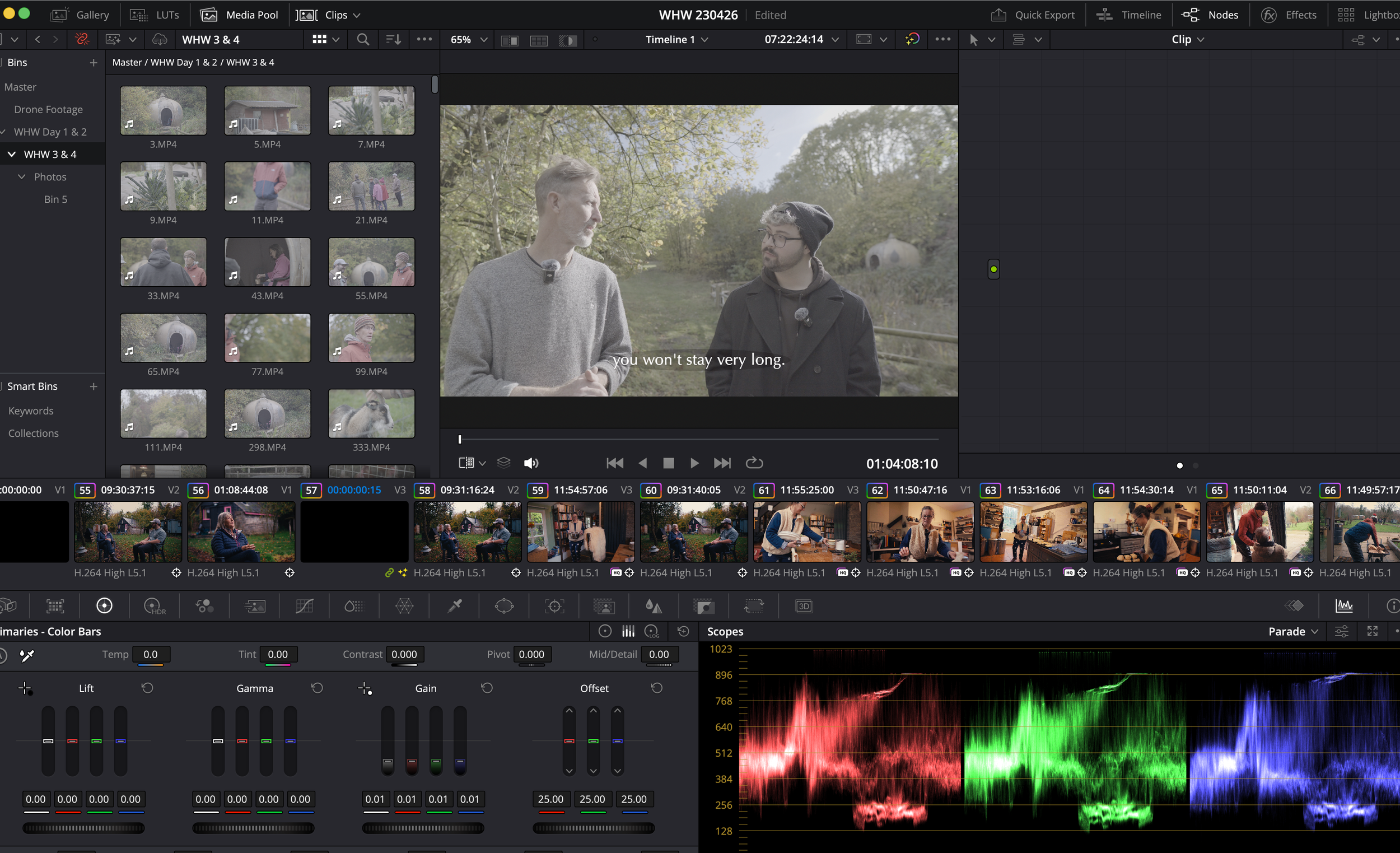
Interview footage before colour correction and cinematic grading in DaVinci Resolve.
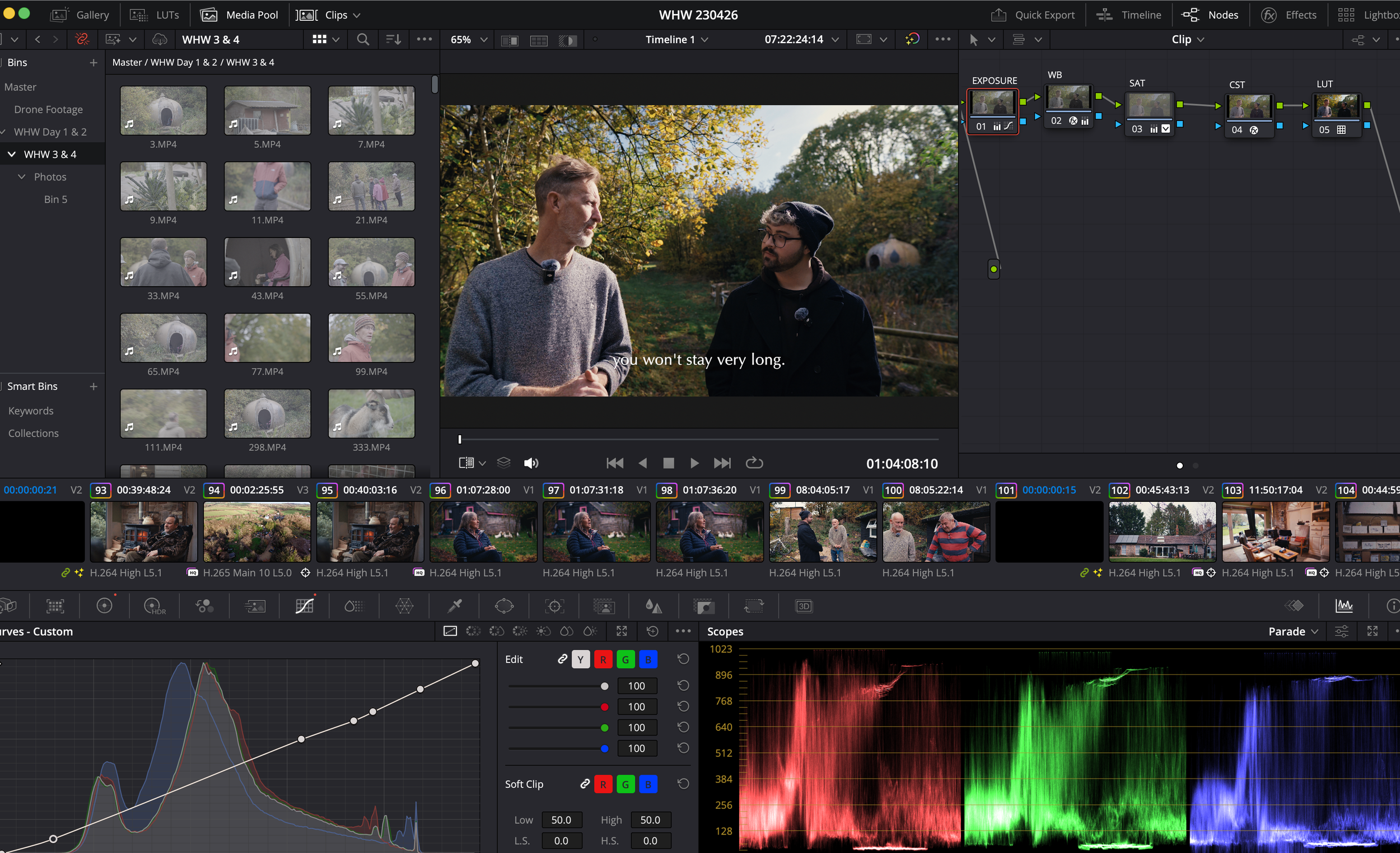
Interview footage after colour correction, tonal balancing, and cinematic grading in DaVinci Resolve.
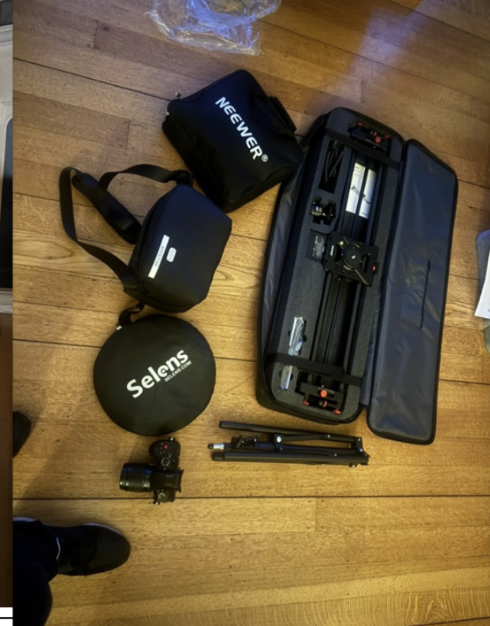
Camera, tripod, and documentary filming equipment prepared for day 1 of shooting at Windsor Hill Wood.
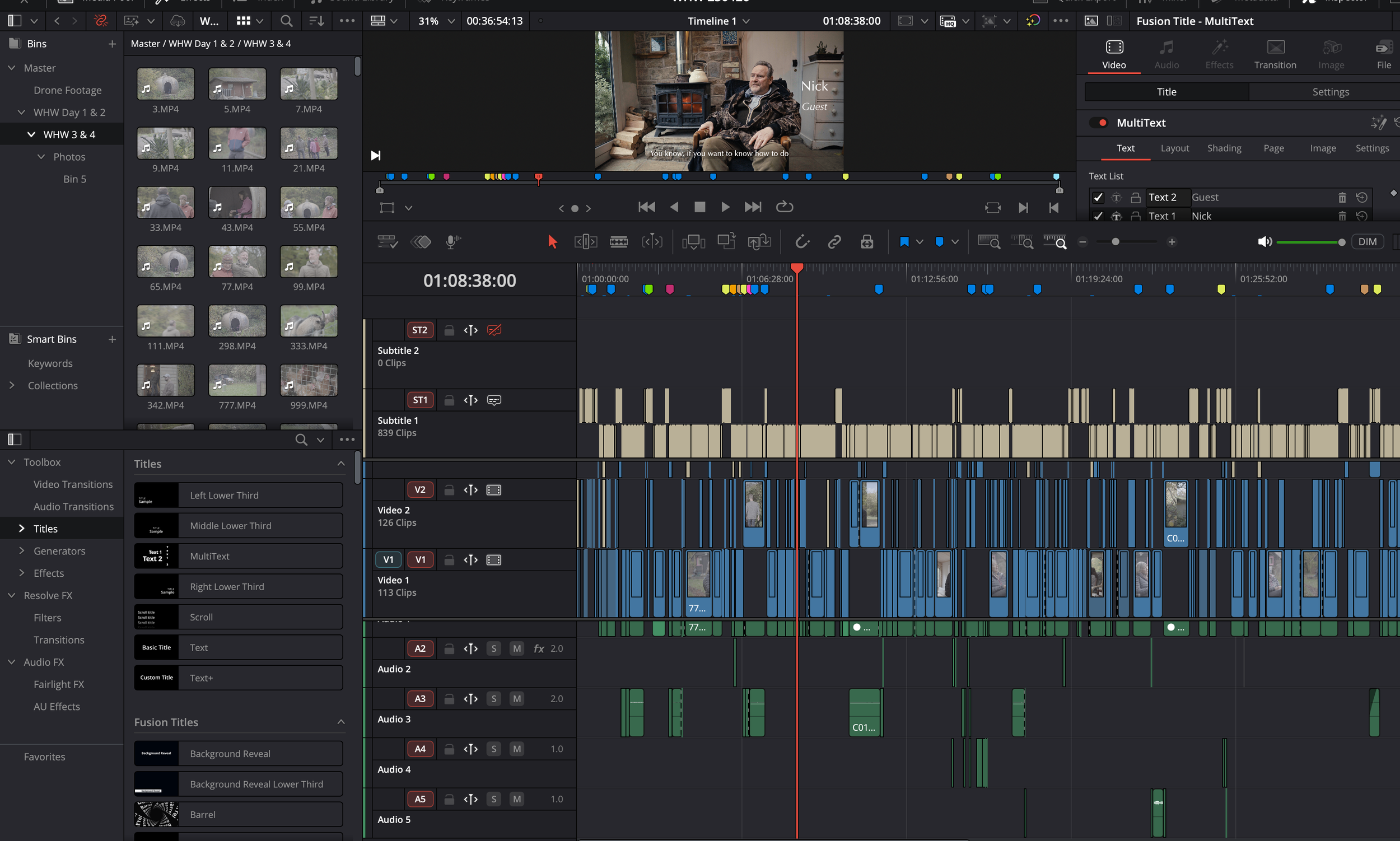
DaVinci Resolve editing timeline showing layered interview footage, subtitles, ambient sound design, and multi-track post-production workflow.
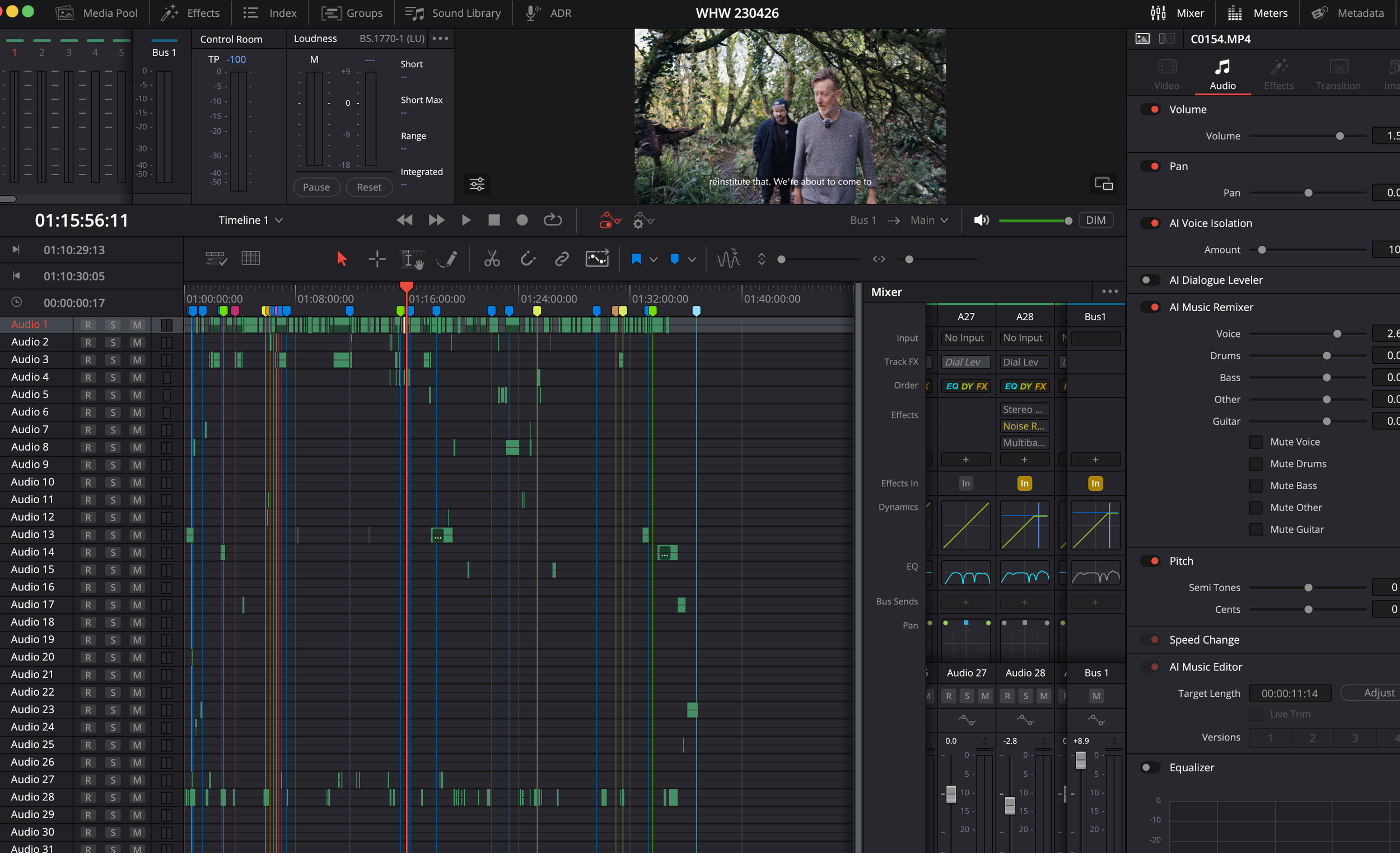
Multi-layered Fairlight audio timeline showing dialogue balancing, ambient sound layering, and voice isolation during post-production.
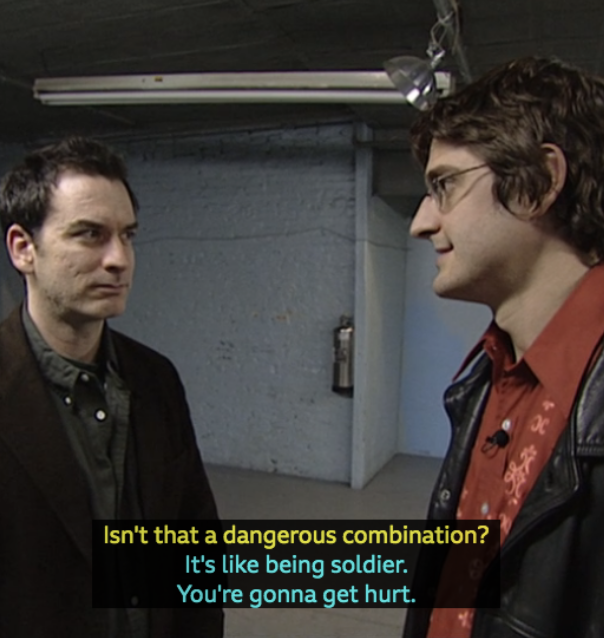
Creative Influences
One of my main creative influences during the documentary was observational filmmaking that focuses more on atmosphere, behaviour, and human presence than dramatic storytelling. I was particularly inspired by documentaries that allow conversations, pauses, and environments to unfold naturally without excessive narration or fast-paced editing. This influenced my decision to use longer takes with interviews, slower pacing, and quieter observational sequences throughout the film.
I was also influenced by the interview style of filmmakers such as Louis Theroux, particularly the way conversations can feel calm and natural while still exploring difficult or emotionally complex subjects. This also influenced my decision to work with an interviewer, as I believed contributors would feel more comfortable speaking conversationally to another person rather than responding directly to a camera. During interviews at Windsor Hill Wood, I avoided heavily scripted questioning and instead encouraged open-ended discussion around topics such as addiction, recovery, loneliness, and community. This helped create a more reflective and emotionally honest tone while avoiding contributors appearing overly directed or performative on camera.
Visually, I was heavily influenced by naturalistic cinematography and slower atmospheric filmmaking. I wanted the woodland environment to feel immersive and emotioVisually, I was heavily influenced by naturalistic cinematography and slower observational filmmaking. I wanted the woodland environment to feel immersive, reflective, and emotionally calming rather than overly commercial or stylised. To achieve this, I relied primarily on natural and practical lighting, shallow depth of field during interviews, slower camera movement, and wider environmental compositions that kept contributors visually connected to the woodland surroundings.
Unlike many documentaries and charity-focused productions that rely on fast pacing, dramatic narrative construction, or emotionally manipulative editing, this project aimed to create a quieter and more reflective viewing experience. The documentary prioritised atmosphere, routine, environmental presence, and long-form observation over conventional dramatic escalation or direct promotional messaging, allowing emotional meaning to emerge more gradually through conversation, silence, and immersion.
The editing process itself also became a major creative influence on the final film. Unlike scripted narrative filmmaking, where structure is usually decided before production, I found the documentary gradually revealing its shape during post-production. Reviewing interviews, environmental footage, archival photographs, and voice-over narration allowed new thematic connections to emerge naturally throughout the edit. This became one of the aspects of documentary filmmaking I enjoyed most creatively, as the structure evolved gradually through experimentation rather than following a rigid pre-planned formula.
These influences collectively shaped both my creative and technical development throughout the project. They encouraged me to think more carefully about pacing, restraint, atmosphere, sound layering, and how technical decisions in editing and cinematography can influence emotional realism within documentary filmmaking.
Feedback, Audience Testing & Revisions
Throughout post-production, I had multiple rough-cut screenings with peers and external viewers in order to evaluate the documentary’s pacing, clarity, structure, and overall immersion. Audience feedback became an important part of refining the final edit, particularly because the documentary relied heavily on atmosphere, conversation, and observational pacing rather than conventional dramatic storytelling.
Feedback highlighted pacing and structural concerns within earlier cuts of the documentary. Some viewers felt transitions between themes and observational sequences occasionally felt abrupt, while others suggested allowing certain scenes to “develop” more naturally rather than over-explaining ideas through narration. This encouraged me to simplify sections of voice-over, rely more heavily on visual observation, and create smoother thematic transitions between interview material, environmental footage, and archival imagery.
Sound design and subtitle readability were also refined following audience responses. Several viewers identified moments where subtitle visibility became difficult against brighter outdoor footage, leading me to adjust subtitle presentation and background contrast during post-production. Other feedback highlighted inconsistencies in audio levels and occasional dialogue clarity issues, particularly between interview footage and environmental b-roll. To address this, I revisited sections of the sound mix using dialogue levelling, voice isolation tools, and more controlled ambient balancing within DaVinci Resolve.
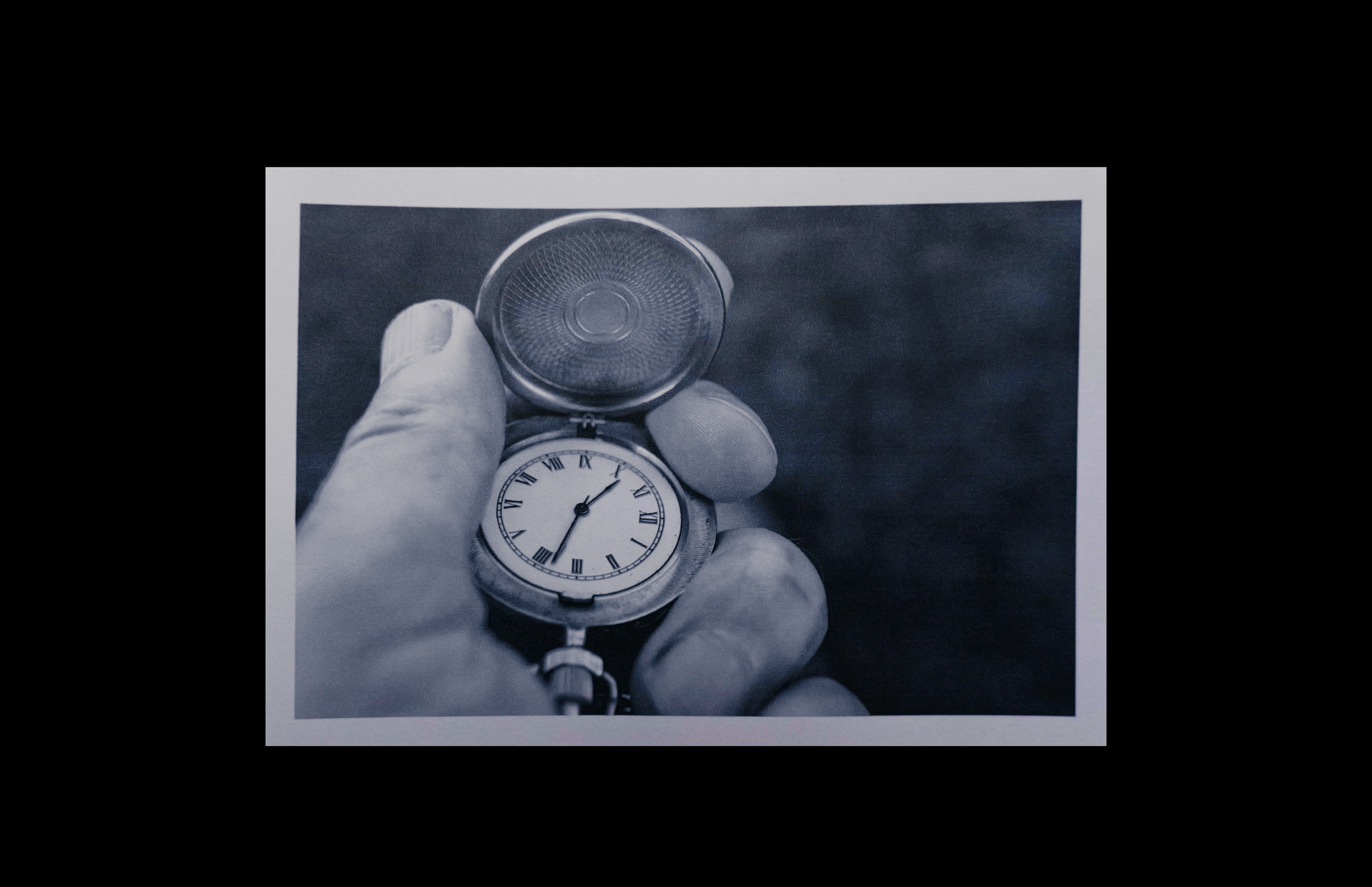
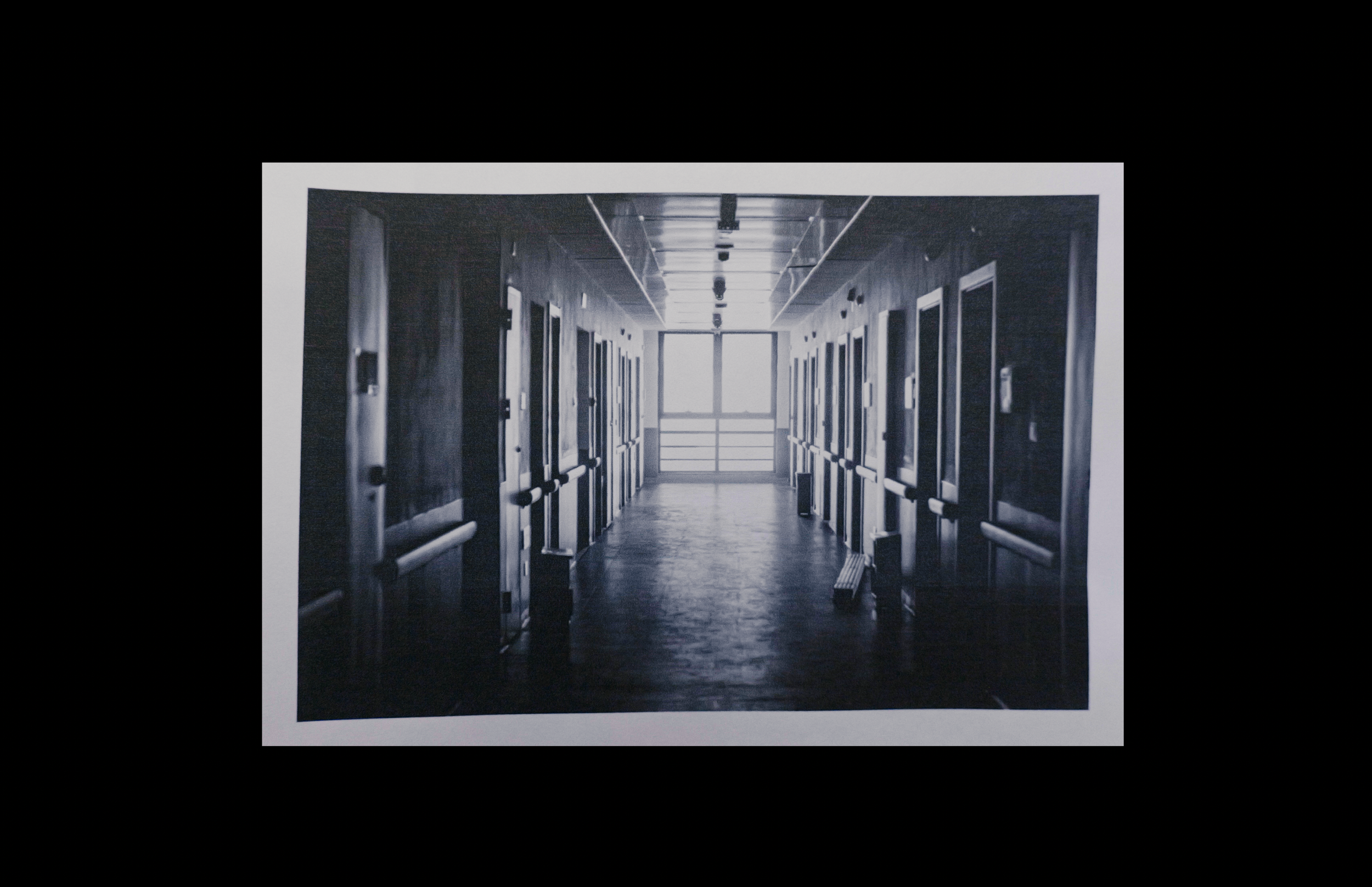
Some audience members suggested adding more environmental context and visual variation during interview-heavy sections, particularly when contributors discussed experiences outside Windsor Hill Wood, such as previous rehabilitation facilities and support environments. In response, I incorporated archival imagery and footage relating to these subjects to better match what contributors were describing on-screen.
To keep the visual style consistent, I presented this material using the same grading, framing, and projector-style sound design used for the Windsor Hill Wood archival photographs. I also expanded the use of woodland b-roll and observational imagery throughout the documentary to reinforce atmosphere and reduce visual repetition. This became especially important due to ethical filming limitations and restricted contributor access during production.
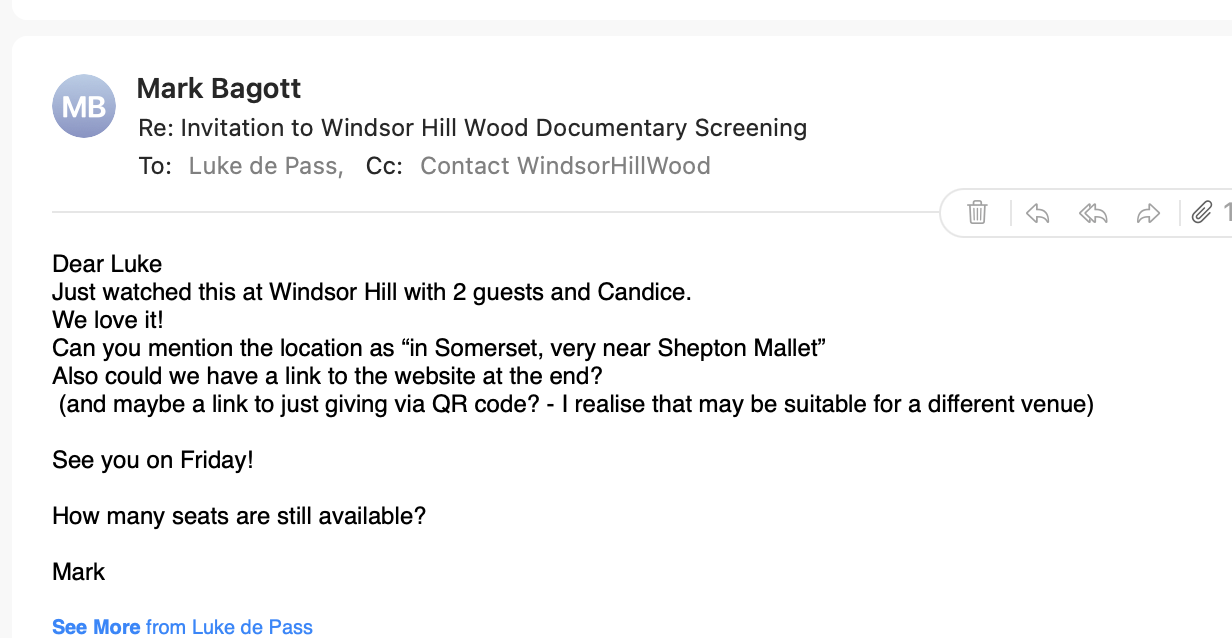
Feedback from Windsor Hill Wood itself was also incorporated into the final version of the documentary. After showing the film with guests and staff connected to the refuge, positive responses were received regarding the documentary’s respectful tone and representation of the community. Minor requested adjustments included clarifying the refuge’s geographical location within Somerset and adding the Windsor Hill Wood website link and QR code at the end of the film to allow audiences to access further information and make donations. These changes were implemented in the final presentation version of the documentary.
Feedback from Windsor Hill Wood after the screening presentation, leading to adjustments in location clarification and donation accessibility.
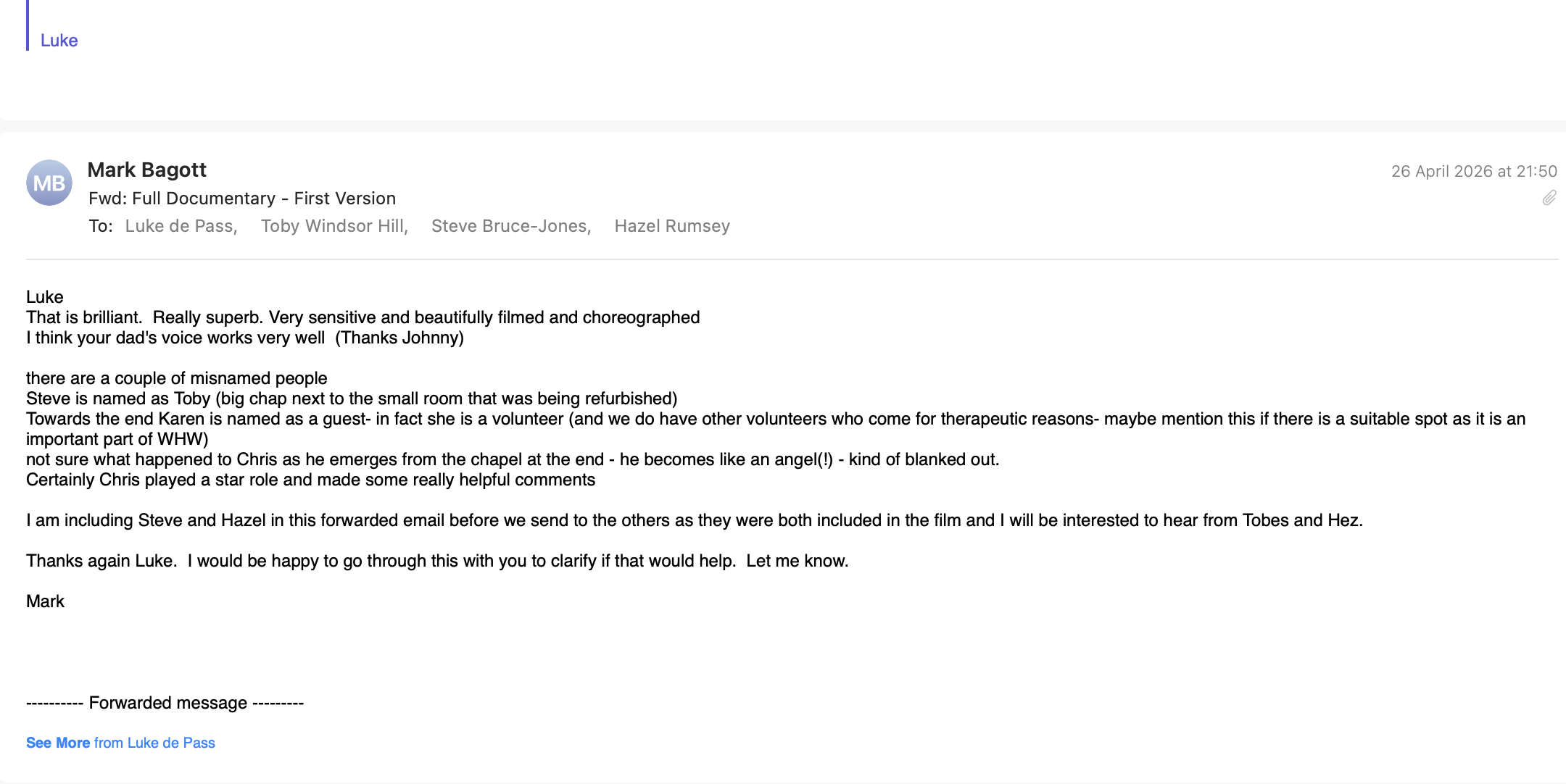
Client feedback on the first documentary cut, including suggestions regarding narration, contributor context, and thematic clarity.
WHW stained & fused glass logo
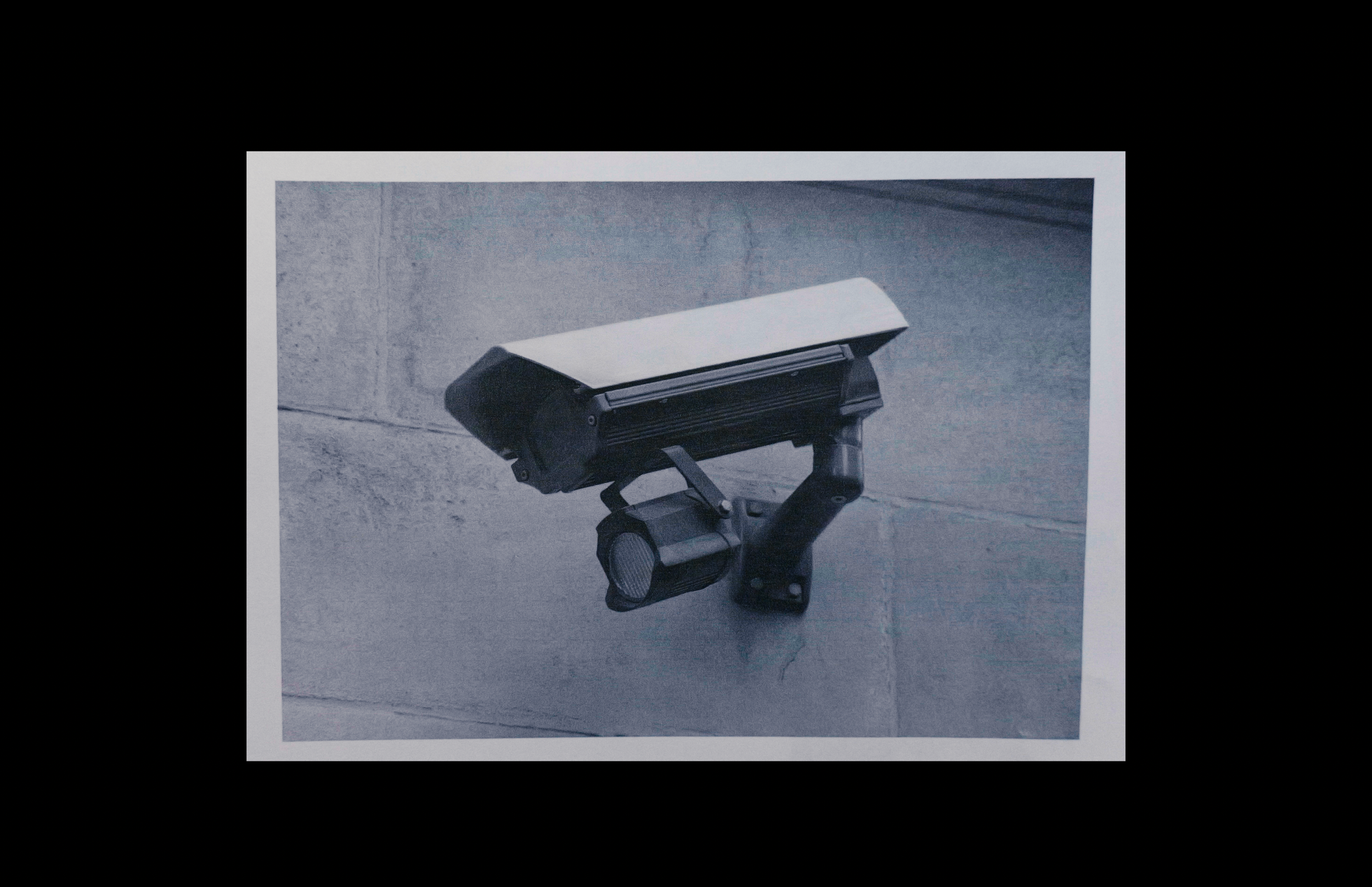
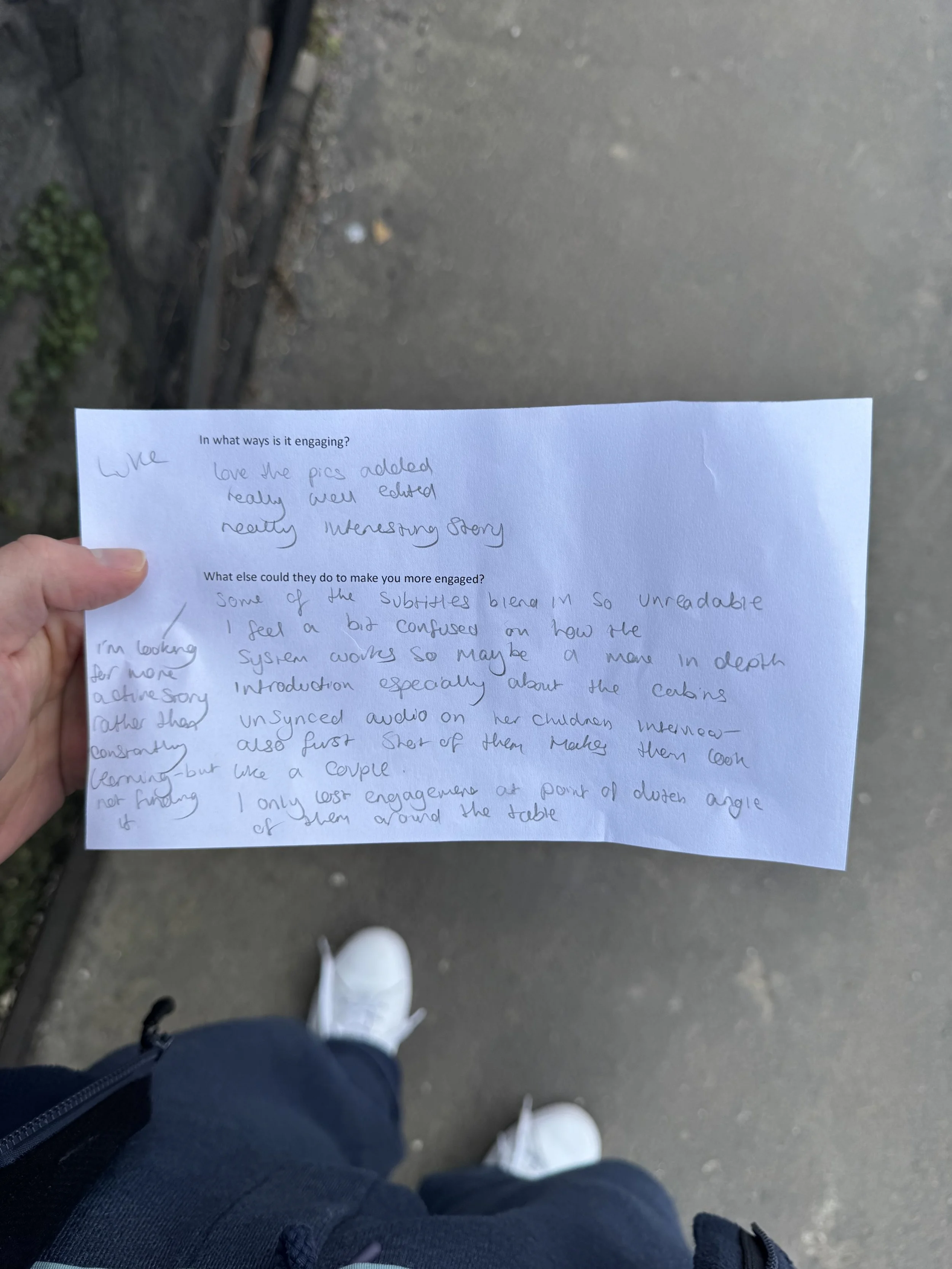
Archival imagery I incorporated to visualise guest experience of facillites outside Windsor Hill Wood.
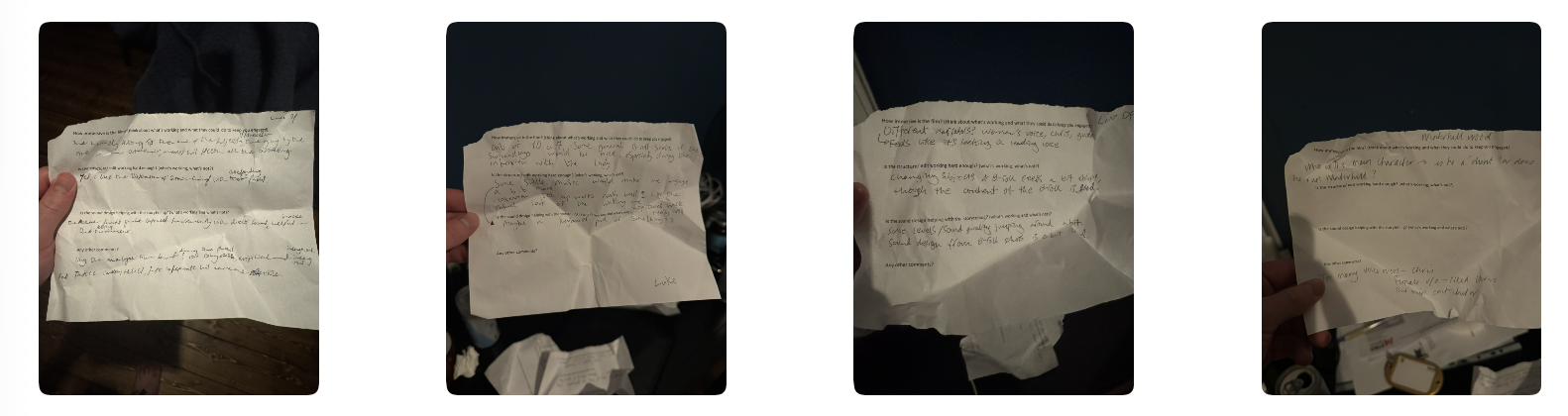
Peer feedback forms collected during rough-cut documentary screenings.
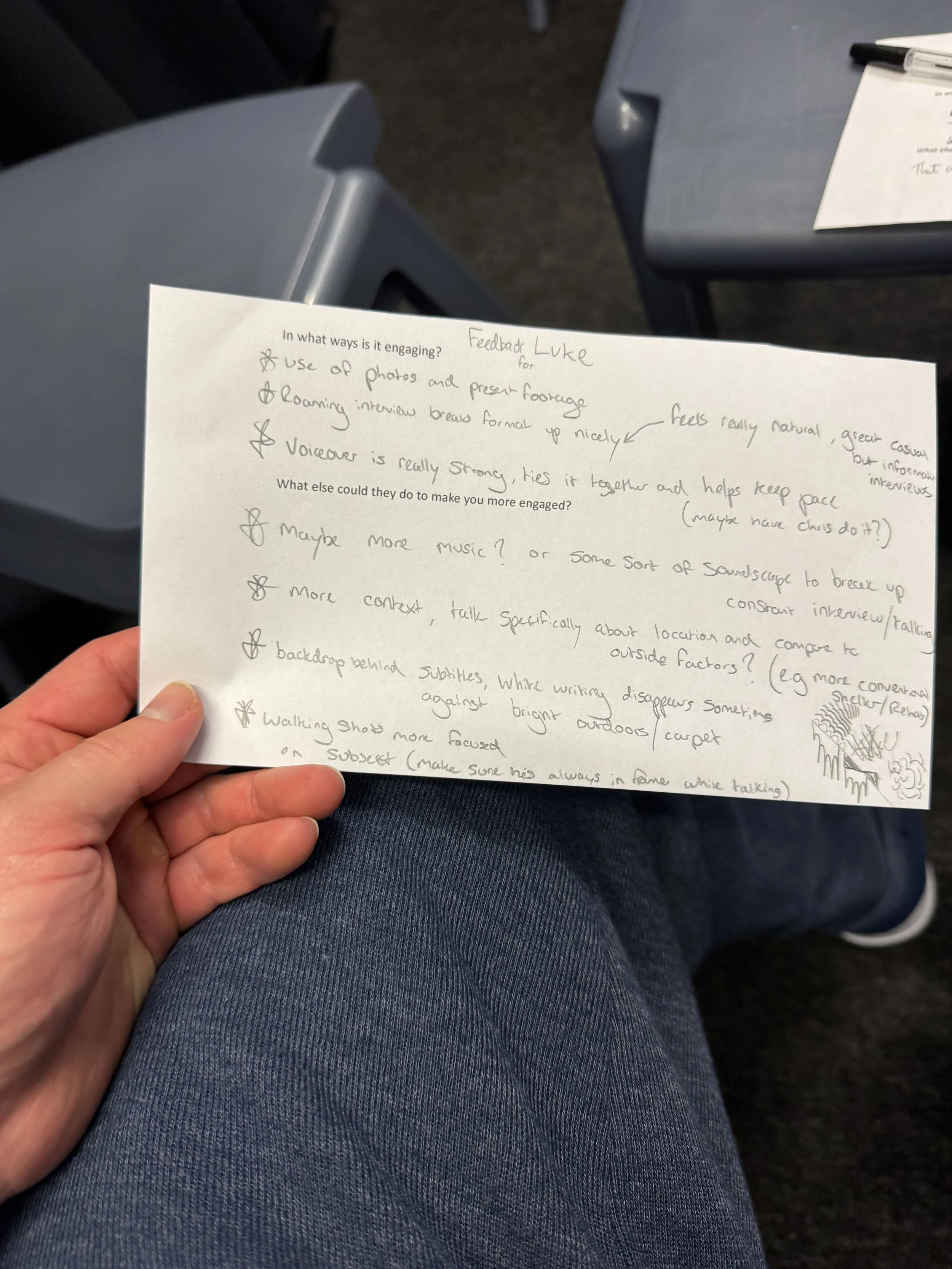
Successes, Areas for Development & Technical Reflection
One of the main successes of the documentary was its ethical and respectful representation of Windsor Hill Wood and the people connected to it. Feedback from the charity itself was very positive, with staff and guests feeling that the documentary accurately reflected the refuge’s ethos, atmosphere, and way of life without sensationalising sensitive subjects such as addiction, recovery, loneliness, and faith. Maintaining contributor comfort and authenticity throughout filming became one of the most important aspects of the production process, and I believe this translated successfully into the final documentary.
The project also significantly improved my technical understanding of long-form documentary production and post-production. Working with approximately 12 hours of footage developed my organisational editing skills within DaVinci Resolve, particularly when managing layered timelines containing interviews, subtitles, music, ambient sound, archival imagery, and observational footage across multiple tracks.
My understanding of sound design and audio mixing also improved considerably throughout the project. Synchronising externally recorded lavalier microphones with camera footage, balancing ambient environmental sound beneath dialogue, and using voice isolation tools to reduce distracting background noise all required a more advanced level of audio editing than I had previously undertaken. The project helped me better understand how subtle sound design decisions can shape atmosphere and immersion within documentary filmmaking.
Colour grading was another major area of technical development. Experimenting with tonal shaping, S-curve contrast adjustments, warmth balancing, and highlight control helped me create a more cinematic visual style while still maintaining realism and the grounded observational tone of the documentary.
However, the project also revealed several areas for future development. Some transitions between interview material and b-roll felt less polished than intended due to limited observational coverage and a lack of sufficient b-roll during production. Because contributor access of the guests was ethically restricted (we had too much footage of Chris, the guest is another area for development as it made it alot about him but he was the only guest that we really were able to film doing activiites.), the documentary became more interview-heavy than originally planned, meaning some edits relied heavily on archival imagery and environmental footage to maintain pacing and visual engagement.
If repeating a similar project, I would aim to increase the number of filming days in order to capture a wider range of observational activity, environmental detail, and cinematic coverage. I would also experiment further with more technically ambitious cinematography, including slower gimbal push-ins, slider movement during interviews, and more shallow depth of field compositions to create a stronger cinematic visual identity while still maintaining documentary realism.
One planned sequence that unfortunately could not be achieved involved filming a nighttime timelapse of the stars above the chapel dome and pond using a slower shutter speed to create a more atmospheric closing image for the documentary. However, due to access limitations and weather conditions, this sequence was ultimately not possible to capture. Reflecting on this highlighted the importance of scheduling flexibility, contingency planning, and allowing additional time for ambitious environmental cinematography within documentary production.
The project also highlighted the importance of thoroughly checking and monitoring equipment throughout production. During filming, technical faults with a Sony A6300 and battery failure resulted in the loss of secondary camera angle footage from two indoor interviews. Although the documentary remained functional using the primary camera footage, (and zooming in for a perceived second-camera) this experience reinforced the importance of equipment testing, battery management, and redundant recording setups during professional documentary production.
Overall, the documentary represented a major step forward in my creative and technical development as a filmmaker. It strengthened my confidence in documentary storytelling, editing, cinematography, sound design, and managing a complex independent production across all stages of development. Most importantly, the project reinforced the importance of patience, flexibility, ethical sensitivity, and observation within nonfiction filmmaking practice.
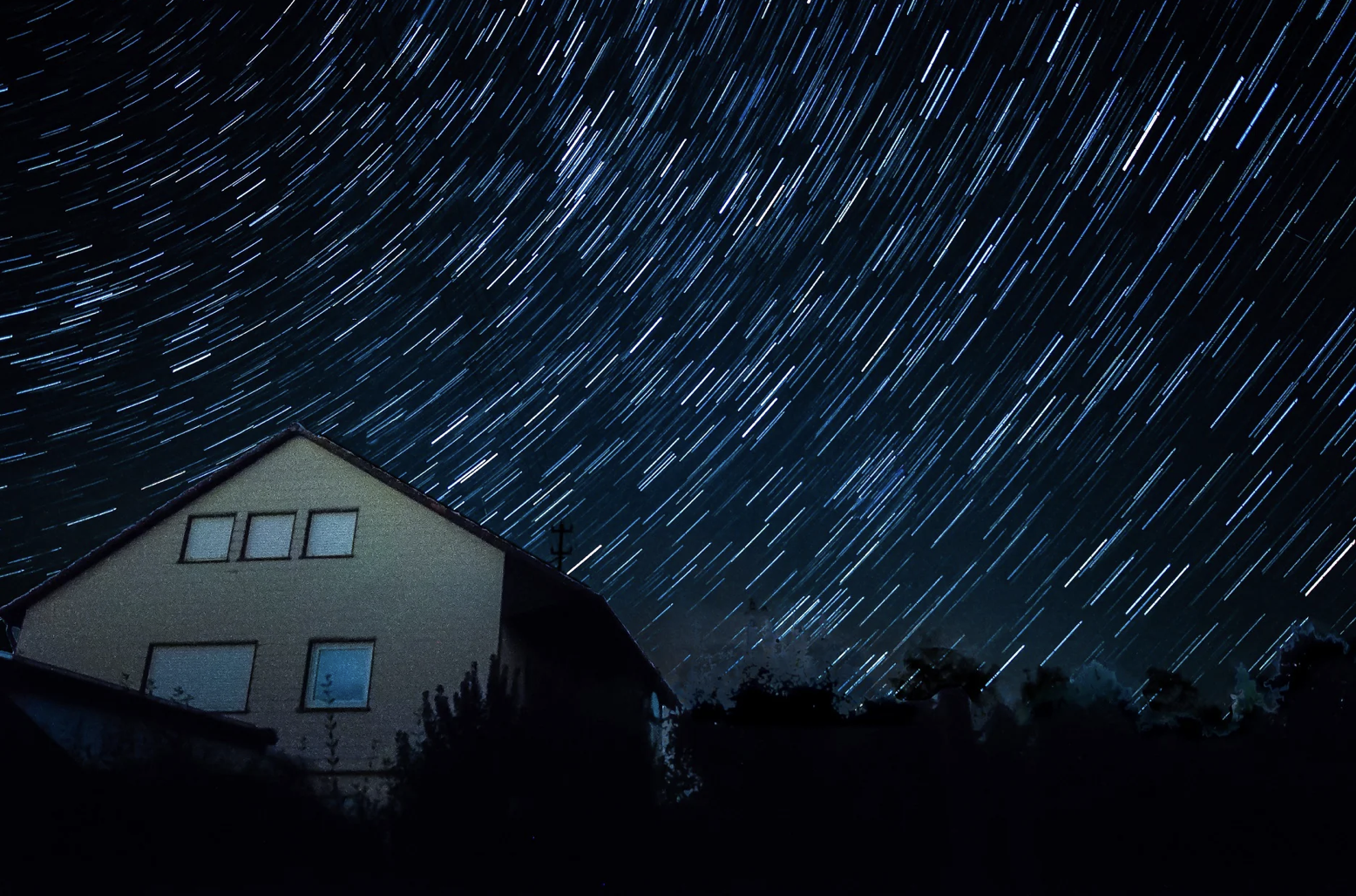
Planned long-exposure timelapse concept intended for the documentary’s closing sequence, inspired by the reflective atmosphere of Windsor Hill Wood.